Showing posts with label music. Show all posts

Sunday, December 25, 2016

La La Land Successfully Updates A Genre

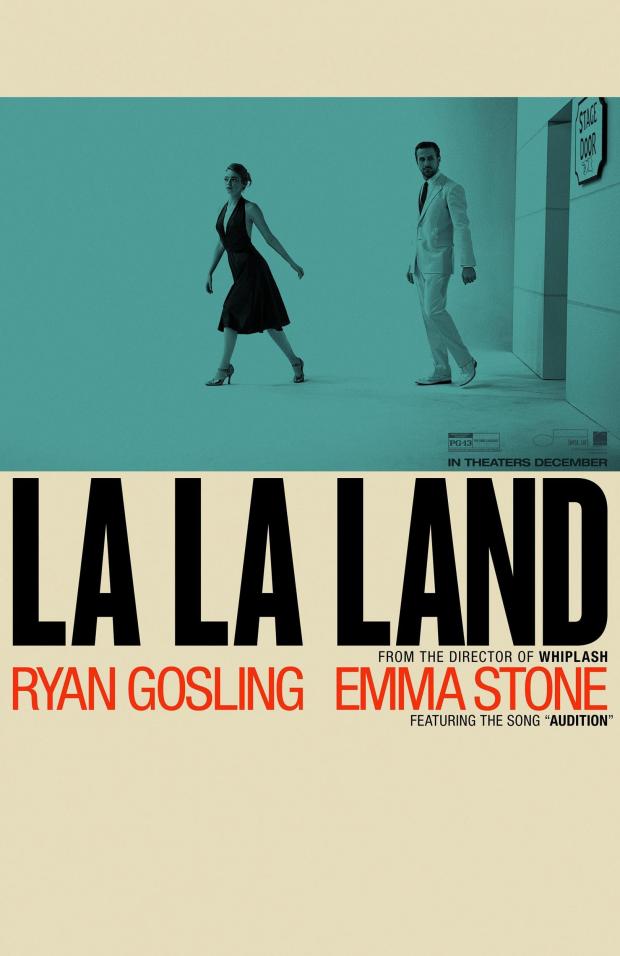
La La Land is a rare bird, a genre musical film— refreshing and uplifting, sincere and happy and melancholy, a much-needed anodyne for the darkness and cynicism of late cinema. It tells the story of the meeting of two young people, Sebastian (Ryan Gosling) the musician and Mia (Emma Stone) the struggling actress. Both are working marginal jobs, waiting for their moment to break into the careers they dream of. When they meet (after a few hilarious missteps) love begins to bloom— and in true musical manner, their emotions soar in the form of song and dance. This is what is wonderful about musicals: in their universe emotions cannot be contained by prosaic reality. They require the characters spontaneously burst into song. Narrative reality breaks loose and people levitate into a magical space where people dance in the middle of traffic jams and fly into the stars of a planetarium.

But it’s not all just a cinematic heaven of singing and lyrical passages of fancy: the eternal rival of romance and career soon takes over.  Mia and Seb inspire each other to take risks, work hard and strive to make their personal dreams come true. The cost of pushing career first soon becomes the central conflict of La La Land, which leads to one of the most soaring and beautiful and melancholy and moving conclusions I have seen in a modern film.

The third character own this film— the namesake— is it’s wonderful, make-believe Los Angeles: Angel’s Flight, Mulholland Drive, Griffith Park, palm trees and stately SoCal architecture under an endless blue sky or deep blue night. It’s a fun, vibrant place full of artist, actors, strivers and dreamers. It’s been too easy in films of late to see LA as some of late-capitalist hellscape (see Training Day): It’s refreshing to remind all of us that LA is a place where people still go to try to make their dreams come true.

Director Damien Chazelle’s last film was Whiplash, a sort of crazy stalker film set in the world of jazz music about an earnest drummer and his insane instructor (J. K. Simmons, who has a lovely cameo in this film).  Jazz plays heavily and strangely in La La Land as well: Sebastian is a young man obsessed with the world of jazz: he has posters of jazz greats in his apartments, Hoagy Carmichael’s piano stool and longs to open a real jazz club in Los Angeles. There are plenty of kids these days who passionately love alls sorts of dead or marginal forms of music: it never becomes clear of Seb is sincere or just really good at affecting his love of the genre.

"A Lovely Night" on location.
The most remarkable number— a real masterpiece of a shot— is “A Lovely Night,” which occurs near the beginning of the film. After a party in the Hollywood Hills where they accident meet up, Seb is helping Mia look for her car. They break into song and dance at a scenic overlook, the wash of lights in the LA basin below. The scene, which goes from real-world to singing to dance to tap-dance (!) is shot at the real location and very specific time: PAST “Magic Hour,” just after sunset, when the warm glow of the sunset underscores a deepening dark blue sky. The set lighting is low as to illuminate the actors and still leave the sunset and sky bright. This scene not only highlights the considerable singing acting talents of of Ryan Gosling and Emma Stone, it shows off cutting-edge film technology: fine-grained, fast film stock (La La Land was mostly shot on 35mm film), fast anamorphic lenses and the latest light, agile camera packages. Were this a Golden Age musical, this shot would have happened on a soundstage. But instead, it is one long, six-minute shot at a very narrow, specific time of day. This makes it breathtaking on several levels.

Another nice PAST-magic hour shot.
La La Land is in many ways an updated classic movie, a pastiche of the conventions, narratives and styles of Hollywood musicals. It is not a breakthrough in and of itself: this isn’t pure storytelling and cinematic innovation like Mad Max: Fury Road was. It takes the best elements of a great genre, updates the sensibilities to contemporary morés and makes it all fresh and unexpected again. There’s a little Vincente Minelli here, some Gene Kelley there, a little Jaques Demy, Even a bit of Ross Hunter/ Doris Day and Paul Thomas Anderson.

Another girl in magical old Los Angeles, dreaming
of acting fame. Naomi Watts in Mulholland Dr.
Given all these obvious movie-history references it was then very, very strange that while La La Land played, the place I kept going to for a visual and stylistic reference was… David Lynch. I COULD NOT STOP thinking: “This is a light-hearted musical version of Mulholland Dr. (2001).” It shares a lot of the same qualities as Lynch’s masterpiece: striking cinematography filled with shots of strong primary colors; an abiding love of Los Angeles locations, show business, actors and the mechanics of filmmaking; flights of surrealism; and intimate close-ups, bursting with emotion. These films are on entirely different missions— light, uplifting musical surrealism versus a surreal dive into the darkest parts of the id— but there is a common thread as well, in look and feel.

I may well be mistaken and La La Land may have been released in the
original CinemaScope aspect ratio of 2.55:1. But that's not how I saw it
in Redwood City: they couldn't even manage to mask the screen right.
And, sorry to say, I have to disagree with both the opening title card and Dana Stevens’ review and report that La La Land is NOT in CinemaScope. That specific film format was proprietary for to 20th Century-Fox and Bausch and Lomb, who standardized the elements of anamorphic cinematography. CinemaScope lenses were not much used past 1960: these early models had distortion problems that caused actors’ faces to widen unnaturally: “CinemaScope Mumps,” they called it. Panavision fixed this problem by re-arranging lens elements to minimize distortion. This film is actually in Panavision: they used Series C lenses to shoot it. But this is a quibble: the widescreen compositions are so lovely and the mise-en-scene is so well developed and rich, it’s worth another viewing just to look for visual clues and symmetries.

If you love Hollywood genres old and new, this is a must-see.

Tuesday, October 6, 2015

My New Favorite Martian

Ridley Scott’s The Martian is a nice reversal of the bloat that is becoming epidemic in most big-budget films— especially in Ridley Scott movies. Prometheus was a hyperactive terrier of a movie, bouncing all over the place, rabidly exploring scifi/horror ideas and abandoning them with equal speed. Exodus was The Bible by way of Lord of the Rings— a dark, heavy, over-art-directed movie that had big CG monsters in it. The Martian is simple and exhilarating— it sticks with a handful of characters and confines itself within the realm of believable science and physics. This last part makes this film sublime: for sci-fi geeks, seeing a film that does NOT invoke some magical frammis to get out of the 3rd act is… well, magical in itself.

Not much to say about the plot you haven’t heard: an expedition to Mars gets hit by a storm which forces them to depart to orbit— leaving one of the crew behind, presumed dead. He isn’t, and now Mark Watney (Matt Damon) has to figure out how to survive alone until he is rescued. How he does it is never less than fascinating.

What makes the film work— aside from the clean direction and terrific casting— is the dialog. The screenplay is by Drew Goddard, a veteran of “Buffy the Vampire Slayer,” “Angel” and “Lost.” Those shows, especially “Buffy,” were known for their witty, fast-paced dialog. The dialog in The Martian isn’t fast-paced (you really need at least two people for proper dialog to happen) but Matt Damon’s naturally self-deprecating manner makes the witty asides Watney tells himself work very well. Humor relieves tension, and pacing out moments of wry exasperation and existential terror in turn makes the experience feel richer and more realistic.

A few notes:

A relatively bulky form factor with
mechanical limitations and limited dynamic range.
The Martian Curse is being met head-on with this film— and so far The Martian seems to be beating it! It took $55 million domestic ($100 million worldwide) opening weekend against a $108 million budget. Just a note about budget here: for a film that displays all the sweep and grandeur of a big sci-fi movie, $108 mil is PEANUTS. Just comparing it to recent victims of the Martian Curse: Mars Needs Moms (2011) cost $150 million to make, and John Carter [of Mars] (2013) cost a mind-bending $264 million or more. And do you know why Ridley Scott’s Mars movie was so (relatively) cheap? It was mostly made in Hungary! The Martian exteriors were shot in Jordan— which, while grand and otherworldly, also looked just a bit familiar. Squint really hard you can see Peter O'Toole’s trailer from Lawrence of Arabia half-buried in a sand dune.

That's right-- everything from Rush's self-titled 1974
 premiere album to 2012's Clockwork Angels, all
on this tiny deal. (Nose not shown.)
• The diagetic soundtrack of The Martian features no song newer than 1979. Apparently the only music left behind on Mars belonged to Mission Commander Lewis (Jessica Chastain), a 1970’s Disco enthusiast. Though this makes for many amusing scenes of Watney being musically tormented (“No, I will not turn the beat around!”) frankly I found this rather unbelievable and a bit of a pander. Guardians of the Galaxy (2014) did the same thing (albeit with a more ecumenical selection of 70s pop) and it’s fair to say that if “Awesome Mix Vol. 1” was not part of that movie it would have been far less fun. They are trying for the same light, easy-to-relate-to musical touch with The Martian— but it doesn’t compute for several reasons: 1. The film set in the mid-2030’s: Disco will be 60 years old by then. Disco is music Lewis’ great-grandparents were into. 2. Digital audio files should NOT be this scarce-- even if they were accidentally left behind on Mars. My friend John received for his birthday the complete collected works of Rush. It was on a USB flash drive that was so small he could literally stuff it up his nose.

Although I did not include it in the article on
The Martian Curse. Robinson Crusoe on Mars did
poorly at the box-office as well. I also forgot
to mention the feature version of My Favorite
Martian
(1999), which also bombed (and
featured Jeff Daniels, who is also in
The Martian!).
The Martian is a Robinson Crusoe story, set on Mars— not the 1964 movie, the 1719 novel by Daniel Dafoe. It explores the application of what is called “Robinson Crusoe Economics,” where the protagonist is in a unique economy where he is the only producer and consumer. To survive he needs to maximize both his personal profits and expand his productivity with very limited resources. Dafoe’s novel was written at the dawn of the Age of Enlightenment, when scientific and rational political thought became paramount. Crusoe was the embodiment of Enlightenment thought: To survive (profit), inventories are made, output calculated and problems are solved, mathematically and dispassionately. As this film is an absolute love letter to Science, nothing could be more appropriate.

• Donald Glover has a small role as Rich Purnell, a JPL astrodynamic physicist who figures in a key plot point. He plays it like a slovenly genius savant: minimal eye contact, poor social skills, the whole deal. Still, as he was both Troy Barnes in “Community” and comic rap artist Childish Gambino, when he showed up on-screen I expected comedy that never actually materialized. Strange.

• Seen in 3D at a late show. I was the only one laughing at the punchy dialog. The 3D is very good, feels natural and the image is unusually bright. See it that way.

Saturday, May 10, 2014

Eurovision for American Dummies


Here's Jedward; and here's this years Austrian entry, Conchita Wurst.

** Flash update, day late and a euro short: Conchita won, thus proving what's mainstream nowadays.

Monday, February 4, 2013

Eximius Scaphium XLVII

A contest for the ages-- the favored XLIX of Civitas Sacti Francisci battled mightily but eventually fell in defeat to the Corvorum of Terram Mariae. The God of the Underworld even blanketed the stadium in darkness, reminding all of the fleetingness of glory. Still, the imperial nature of this event get a little more intense every year: A little more reflexively patriotic, a little more excessive and bombastic, a little more awesomely exclusive, a little less about football.

Heck of a game, so-so broadcast. Still a hugely watched event, 108 million viewers, the third most watched ever.

• Good, weird game. It was a story of competing tempos: The Ravens had it in the first half, and after the blackout the 49ers had it. Unfortunately, that's the wrong time to gain tempo: Super Bowl games can't be won before halftime-- but they can be lost.

• This was a hometown game. When the Giants won the World Series a few months ago, it was double 4th of July in my neighborhood. After the Super Bowl was over, you could have heard a pin drop outside.

• Halftime was professional, none of the coarse goings-on like last year's Madonna jamboree. Beyoncé and the Clones of Doctor Funkenstein did a great job. They probably pulled too many amps with all those video displays and 5K spotlights, which overheated something and lead to a blackout.

Beyoncé and the gang, backstage before the big show.
• Commercials: Blah, for the most part:

• The one that lead in survey as most memorable was a Budweiser ad featuring a horse breeder reunited with a Clydesdale running unbridled through the streets of Chicago, all set to "Landslide" by Fleetwood Mac. Eh. First of all, using "Landslide" to tug heartstrings was done first and better in "You're Getting Old," an episode of South Park from 2011. Second of all, If I know anything about Chicago police, if they saw a huge horse running down the street alone the poor beast would experience a sudden and decisive animal-control action.

• Chrysler featured the highlight and lowlight ads. "God Made a Farmer" was a brilliant two-minute ad, stunning in it's simplicity: a slideshow of hyper-sharp stills of real farmers set to an old Paul Harvey spoken piece. It was the anti-Super Bowl: simple, unglamorous, VFX-free, and told with undeniable sincerity. It was so light on product push the product (Dodge Trucks) was not seen until the last title card. People are already making fun of it, which is a predictable pattern: much like the critical reaction to Les Miserábles, It's sincerity flew under their Ironic Radar Systems.

• Oprah Winfrey narrated an ad for Jeep illustrating the lives of military families and veterans. This pisses me off. I don't care if they stuck a USO logo in the final title card, using members of the military to sell things (like, as someone tweeted, a car that gets 13 MPG) is borderline seditious.

• The rest of the ads were unmemorable, and for the most part most of the Bay Area would just as soon forget the whole thing.

Friday, August 10, 2012

Walden: now on X-Box and PS3

A TPN:BOW Repost, showing that I was getting my curmudgeon on 4 whole years ago! --s
The mass of men lead lives of quiet desperation.

–Henry David Thoreau, from his book Walden, 1854
Quite honestly, I believed the line “quiet desperation” came from this source below. I still think most average English-speaking people of a certain age do as well:

Every year is getting shorter, never seem to find the time

Plans that either come to naught or half a page of scribbled lines

Hanging on in quiet desperation in the English way

The time is gone, the song is over

Thought I’d something more to say

–Roger Waters, from “Time,” by Pink Floyd, 1973
Either way, the aphorism doesn’t apply anymore. Here’s why:

[Quite a while ago, apparently], as my bandmates and I tried like hell to load out of a rehearsal space to make room for the next booked band, the conversation took a philosophical turn. Not the best way to turn a conversation when you’re in a hurry, but that’s the way things go.

We were all being somewhat affected by the changes and vicissitudes of the middle years. We were tallying up various minor maladies we were suffering, recounting the ill fortunes that have befallen the friends and family of all the members of late.

Glen, the quiet, reserved rhythm guitarist, asked, perhaps not all that rhetorically, if this is what the future held for all of us—a series of increasingly unhappy tidings, the eventual closing of life’s doors of opportunity until only one remains.

David, the talented lead singer, brought up the “Quiet Desperation” quote. We all agreed.

Then I thought about it for a bit. We had all just finished damaging our hearing for three solid hours with rock.

What do people in America do to inject some distraction and excitement into their empty lives? They do something cacophanous. This is becoming the Age of Noisy.

• Movies are LOUDER than ever. Almost all multiplexes are equipped with three-thousand-watt, DTS-SDDS-Dolby Digital compatible auditoriums. The average IMAX theater is equipped with 10,000 watts of audio power.

• TV is LOUDER than ever. The HDTV broadcast standard includes 5.1 surround sound.

• Video Games are LOUDER than ever. The gentle “beep-boop” of Colecovision has long yielded to game fare like HALO in its fully 5.1 surround sound capable, subwoofer-shredding glory.

• The Internet is LOUDER than ever. Try to enjoy surfing the web sans computer speakers sometime. [actually, the advent of phone apps may have quieted things down in this area a little-- but not much.]

• The friggin’ WORLD is louder than ever. In my neighborhood, there is a 1:1 correlation between people who rent their dwellings and people who own LOUD gas-powered things. (Noticed I said “people who rent:” People in my area who OWN their dwellings are either too busy working to pay mortgages or too old to be into new-fangled whiz-bangs.) Big shiny motorcycles, just like "American Chopper:" They run them up and down the streets most weekends, not really having anywhere useful to go. They also own those little gas-powered razor scooters, hot-rodded cars, gas-powered RC cars, etc. etc. The outstanding neighborhood annoyance is a guy with a LOUD Harley-compatible bike equipped with a fairing—into which he installed a stereo. So the entire block gets to hear him rev his bike, turn up his now drowned-out stereo, rev his bike again, re-adjust his stereo, and so on and so on. It’s the most foolish thing on two wheels I’ve ever seen, and I’ve been to the circus.

How are we, the citizens of consumer-culture Western society, personally reacting when faced with a quiet moment? Do we take stock, accept the silence as an introspective moment of Eternity visited to our hectic existences? Or do we drown that mother out?

Admittedly, some people do accept and even seek out quiet and solitude, and use this stillness to enrich their soul and accept their place in the Universe. But not enough, not nearly enough– and our own technology has made it far too easy to turn to entertainment to fill the void. Could Walden have been written if Thoreau had DirectTV?
The mass of men lead lives of noisy desperation.

–Skot C.

Wednesday, April 11, 2012

Eyes Without A Face (Not the Billy Idol Song)

Got a chance to watch this, last night-- part of a slate of TCM classic films picked by, of all people, celebrity chef Anthony Bourdain. Apparently one of his favorite films was this one, a French horror film (Les yeux sans visage) from 1960.

Le plot: Docteur Génessier, a brilliant surgeon, has a daughter who had her face blown off in a car accident that was his fault. Not just some facial scarring: we assume she does not have any face at all because she is forced to wear a creepy-looking mask. His assistant Louise kidnaps fair, blue-eyed girls from Paris (out of gratitude: some time in the past he fixed her face), takes them to his country estate where he chloroforms them, cuts their face off (they show this happening with unsettling detail) and grafts it onto his daughter. The grafts generally don't take, requiring more trips to Paris for Louise.

This goes on until the Gendarmes realize a lot of fair, blue-eyed Parisian girls have gone missing, and they convince Paulette, a petty shoplifter they have in custody, to be kidnapping bait in lieu of jail (I assume this sort of plea-deal is legal in France).

The end comes not by the Gendarmes catching Le Docteur Fou, but as things just go awry, Coen Brothers style: The cops delay the Docteur, the chloroform wears off, Paulette escapes, Louise tries to stop her-- and the faceless daughter stabs Louise to death. She then releases a lot of dogs from cages (he had 'em for grafting practice), they get out and chew Docteur Génessier's face off (the irony buzzer goes off) and the faceless daughter, a dove on her shoulder, wanders off into the woods. Fin, over the blare of the Irony Klaxon.

All this definitely qualifies Eyes Without a Face as a horror film. It was influenced by early Hammer films, which were very popular in France in the 1950s. Les yeux sans visage was eventually released in the United States-- after being dubbed, edited and retitled The Horror Chamber of Dr. Faustus. It came out on a double-bill with The Manster-- Another flawed classic.

A few thoughts:

EWAF was directed by Georges Franjou, the co-founder of the Cinematheque Française, the world's first cinema archive. The influence of the films he archived--in particular German Expressionism-- is quite evident in some nice little bits of poetic film language added to the horror-film base, a cinematic roux. My favorite: Docteur Génessier is opening up a crypt in a cemetery to dispose of another dead girl's body. Louise stands guard. She hears a roaring sound. Thinking a car is coming, she looks around and sees nothing. But she looks up-- and sees a jet flying high overhead in the night sky. The shot lingers: the wingtip lights blink as it slowly crosses the frame. Then another shot of Louise-- just watching the plane. An ambiguous, introspective, beautiful moment plunked right in the heart of all the horror.

This is the best look we get of La Fille Sans Visage
in all her purposely out-of-focus glory.
The power of imagination-- or was 1960 effects makeup
technology not up to the task?
• This film could really, really stand a decent remake. it's got Remake Formula all over it: An intriguing idea, not applied fully and effectively. EWAF is the Frankenstein story, with a mad doctor using living people instead of corpses: this little change makes his violations personal (gimme your face, lady!) rather than theological (take that, God!). It has influenced quite a few other films-- Dr. Sardonicus (1962), Face/Off (1997) and countless lesser drive-in flicks. Pedro Almodóvar's The Skin I Live In (2011) is close to a logical sequel-- after you add the his trademark insane family drama to the mix. And if you take EWAF, subtract the mad doctor's personal justification and bury the needle in terms of sheer nihilism, you get The Human Centipede.


• It's another film with a soundtrack that has not aged well. It was the second score by Maurice Jarre, who would go on to win an Oscar with his score for Lawrence of Arabia two years later, pretty much the only member of the EWAF cast or crew who would make a successful migration to Hollywood. For all the orchestral sweep of his scores (Dr. Zhivago, Witness, Ghost) with EWAF his musical contribution is stubbornly Gallic. Jarre created themes to his score: when the mad doctor's assistant would go out looking for fair mademoiselles to carve up, the soundtrack would blare something that sounded like a bistro quintet with a triple-time "umm-PA-PA" meter. It's almost exactly like the theme song of "The Larry David Show." Distracting.

• Courtesy of the IMDb and Hulu, you can actually watch the entire thing free!
Wednesday, April 20, 2011

The End of the Monarchy

Just wanted to give a shout-out and spread the news - my old acquaintance Richard Cheese and his band will be playing at the Royal Wedding reception. This will, I suspect, bring down Western Civilization. And it's about time!

Monday, March 21, 2011

Not THAT Bad

Don't get me wrong, this is an awful little song. It's just not as bad as the gold standard of bad, My Humps.

Still, it's bad enough to have had this result:

Rebecca Black's pop video has been viewed on YouTube 29 million times American schoolgirl singer Rebecca Black has said that negative online comments about her music made her cry.

The 13-year-old's Friday video is currently a major internet hit with 29 million views so far on YouTube.

But the track has been heavily criticised online - with some newspapers and commentators dubbing it "the worst song of all time."

"When I first saw all these nasty comments I thought this is all my fault," she told US TV network ABC.

"[I thought] this was all because of me," she added, speaking on the Good Morning America show.

Rebecca said the worst post was someone who'd written "I hope you cut yourself and I hope you get an eating disorder so you look pretty. I hope you cut and die."

The video for Friday has has been trending continuously on Twitter and is notching up views at a rapid rate.
I'm on the fence - on one hand, I could shell out a buck, buy the single on iTunes and cheer the poor kid up. On the other hand, that would just encourage Ark Music Factory to release more stuff like this, humiliating more 14-year-olds who aren't prepared for notoriety. It's a moral quandry, this song.

Thursday, February 17, 2011

Rama Lama Ding Dong: The DVD

Just a few days a go a real treat landed here at my day job (authoring DVDs and BluRays): a 3-disc Doo-wop concert series.

I can't go into too much detail, because of the whole professional confidentiality deal, but the disc set is one of those public television promotional titles, the kind you'll get if you pledge some determined amount. The first two discs are all relatively recent oldies-tour performances by original 1950s artists, which is a treat in itself when you watch some of these solidly senior senior citizens belting out songs like they were still teenagers-- like septuagenarian Jay Black holding, holding, holding the high notes on "Cara Mia."

The Shields.
But the fun part was the third disc, a wad of old kinescopes of original 1950s doo-wop acts, mostly culled from the old Philadelphia "American Bandstand." It completely embodied the complete bafflement, mentioned earlier, that the powers of media had with new music.

The Flamingos.
In song after song in the compilation, the Doo-wop groups deliver the goods in increasingly weird stage settings. The Shields sang "You Cheated, You Lied" dressed as naval officers at the wheel of a tall-masted ship. The Flamingos delivered a performance of their hit "I Only Have Eyes For You" in winter gear, next to a faux frozen pond. The lead singer looked quite bewildered throughout.

(note: I'd LOVE to uploads clips of this stuff, rather than just describe them. But I'd get in in sooooo much trouble. If I ever find them already posted, I'll update with links. But stills are OK-- That's more like free publicity.)

The Skyliners.
I'll assume you've all heard "Since I Don't Have You," the 1958 hit by The Skyliners, right? It's a slow, soaring Doo-wop ballad (covered by Guns n' Roses and Buckaroo Banzai). It's not hard to have a mental image of this song as a cool, sophisticated urban tune, infused with a Steel City street-corner vibe. So seeing them dressed like extras from "Bonanza," shuffling in hesitation step through a hyper-detailed Old West Saloon set (complete with balcony) is strange on an almost extraterrestrial level.
The studio audience.
The buttons they're wearing are for
a Beech Nut Gum ad campaign--
which explains why they were all
chewing like a bunch of ex-smokers.


And the studio audience of Philly teens had a hard time getting it too. In several of the performances they could be heard clapping along in "white" up-beat and "black" down-beat at the same time, combining for a dissonant double-time clap-CLAP-clap-CLAP syncopation.

These days, nobody of any ethnic affiliation would be caught dead clapping on the upbeat. Except in Disneyland. When I went there as a kid with my friend K. David (the talented guitarist who turned me onto this super-odd Rolling Stones promo), he would bedevil the tourists by insisting we all hit the 2 and 4 during the robotic entertainments. It never turned the crowd, but maybe it got them thinking.

I've always liked this old music. But I like music in general, and some new stuff (like "Fuck You" by Cee-Lo Green) is amazing. Was it better music? Can't say, but I saw a rather poignant YouTube comment on the Skyliners song that gave me pause: "I wish I was a teenager in the 50's and 60's, I cant tell you enough how much it sucks to be 17 right now when all the music around you is crap and the cars look ugly as hell and are all plastic and the styles are all junk." I said the same thing back in 1978, so I can relate.

Thursday, February 3, 2011

Here's Another Clue For You All

For people who like their conspiracy theories to be explicitly without merit, this may provide you with an hour's entertainment. The blog Turn Me On Dead Man exhaustively researched the insane rumors about Paul McCartney's death and presents all the evidence for you to enjoy.

The story was that Paul McCartney had died in a car accident at 5:00 a.m. on Wednesday, November 9, 1966...Paul had picked up a female hitchhiker on his way to visit friends. The woman became so excited when she realized who had picked her up that she threw her arms around Paul and caused him to lose control of the car. Both Paul and his passenger were killed when the car swerved off the road and hit a stone fence. And here's where the story takes a turn toward the ludicrous—Paul was decapitated in the accident and the trauma to his head was so severe that even his dental records were useless in identifying the victim! Not wanting to lose potential record sales, record company executives suppressed the story of Paul's death and brought in a lookalike to replace him. For some reason (this is the part where you have to suspend disbelief) the surviving Beatles agreed to go along with this scheme, but they left clues on all of their subsequent albums about Paul's death and the imposter who took his place. Paul's stand-in was a man named William Campbell, who had won a Paul McCartney lookalike contest. With a little plastic surgery, William Campbell had taken Paul's place in photos of the group. The surgery had been successful except for a small scar above his lip. And, as luck would have it, William Campbell could also sing and just happened to be a songwriter with an exceptional ear for pop melodies.
To me the best evidence that McCartney wasn't replaced with an imposter is timing: if he was rumored to have been killed in a crash and replaced around 1976, when his songwriting really went to crap, THEN you'd have a case. Instead, a few years after that Paul released a live album with this cover.


You can't see the licence plate on the VW but it says 51 IS. Now that's comedy.

Thursday, January 20, 2011

Butch, Barbarella and the Pain Threshhold

Music is so prevalent in motion pictures (and television, video games, public spaces, smartphones, etc.) that for the most part we don't even notice it unless it's trying to flay us (like the stings in Inception-- Yes, I'm sure we have all pushed the button on that link by now. I never get tired of it). For the most part, good movie music seamlessly underscores the tone and rhythm of the film and reinforces it's genre-- the double-beat percussion of a Michael Bay film, the whimsical strings of RomComs, the oldies abuse of Tarantino or Wes Anderson.

But there was a time, quite a while ago, when Hollywood could not figure out what sort of music to put in films-- and I ain't talking about the eighties, when the studios apparently fired all their musicians and hired a keyboard guy. Things have improved as far as major motion pictures go, but television still uses just that one keyboard guy: synthetic music technology has gotten so good that you really can't tell it's just that one guy anymore.

No, I'm talking about the late 1960s, and I have two examples of films, quite good films, that were very nearly sunk by their music. The youth-culture explosion of the era must have left some studio executives completely clueless as to how films should be scored: They may have thought symphonic music would be considered "square." And there were few actually young producers genuinely connected to the times, such as Peter Fonda and the remarkable soundtrack of Easy Rider (1969). So some producers tried to bring in the kids with a "hip" score-- and they didn't always succeed. And nothing, in the historical long view, dates a film as badly as poorly chosen music.

Barbarella (1968) is a big-budget European sci-fi psychedelic freakout of a film, directed by Roger Vadim. It stars Vadim's wife Jane Fonda wearing costumes with transparent sci-fi bits in a role I think was calculated to give Henry Fonda a stroke. It's over-the top, tongue-in-cheek, breezy fare, sure, and it didn't exactly set any box-office records when it came out, but it has an undeniably unique visual style. It's also the very first film adapted from a comic book (Flash Gordon and Buck Rogers were serials).

For reasons I can only imagine were tied to a sincere effort to be groovy, Bob Crewe, a former member of The Four Seasons, was hired to composed the soundtrack. The result is painful. His idea of creating a sci-fi mood is to run a guitar through a super-wet coil (you can hear this on Frankie Valli's "Can't Take My Eyes Off You," which Bob Crewe co-wrote). It's such a overwrought, high-pitched, silly sound that it begins to hammer at you, turning from merely annoying to mild torture by the end. Which is a shame, because what's onscreen is quite lovely to behold.*

On the more Hollywood side of cinema, the producers of Butch Cassidy and the Sundance Kid (1969) must have thought they had a pretty hip property (two guys, one gal, not married!) so they hired a musician who must have seemed pretty far out by studio heads at the time: Burt Bacharach. (I just saw this in sublime HD, which is why I wrote this piece.)

(And I'd like to point out that I am not just making fun of old movies here. I'm sure audiences at the time were as bewildered as I am now that someone would hire a Doo-Wop artist to score a sci-fi love-in, or Dionne Warwick's songwriter to compose a western.)

I'm quite amazed by how, in several sequences, the music sucks you completely out of the film. There's a scene where Butch and his maybe-girl Etta goof around with a bicycle (which was a new invention in the film's setting in the 1890s). "Raindrops Keep Fallin' On My Head" plays. This gets you half-way out of the film. Then, for some reason, the soundtrack starts blaring what can only be described as three minutes of obnoxious circus music. You are then pushed completely out of the film, left watching Paul Newman and Katherine Ross aimlessly improvising bits with a bicycle on a ranch set. This out-of-film experience happens again later in a sequence where Butch and Sundance elude a determined posse to a peppy, mixed-chorus New Christie Minstels sort of scat deal.

But bad music, in this instance, does not kill the movie. It's still a remarkably good watch, much of that credit going to George Roy Hill's interpretation of William Goldman's amazing script. Never a dull moment-- though there are some hard-on-the-ears ones. Katherine Ross was sexy and great, Paul Newman gives an amazing performance and Redford, well… The producers lucked out by getting Robert Redford at the exact moment when he was in full bloom, at his absolute maximum amount of handsome. I'm not generally attracted to men, but in many scenes I found myself unable… to... stop… staring at him.

Jane Fonda, Robert Redford: I guess you can turn the sound off.

*And yeah, they're remaking Barbarella, and the talk is Rose McGowan will be playing her. Maybe they can get Sha-Na-Na to do the soundtrack.

Monday, January 17, 2011

When The Going Gets Tough, The Tough Get Netflix

There's this bug going around the office - it hits you like a ton o' bricks, and the next thing you know you have a 102 degree temperature and the energy level of a Romero zombie. The shambling kind, not the sprinting kind. My ton o' bricks came at me about 3 o'clock on Friday afternoon and suddenly I had no interest in any of the fun gallivanting I was planning for the weekend. Basically if I didn't have the choice of crawling rather than walking, i didn't want to go.

So hoorah for streaming Netflix! When I had the energy to sit up, I was able to enjoy a few gems. If you absolutely need to be a couch potato, Netflix could very well be the thing that saves your life.

For example, I finally caught up with Exit Through the Gift Shop, the "documentary" by "Banksy". Skot once defined art to me as "anything you can get away with" and that is very much the theme of this movie. The narrative concerns a French eccentric who was documenting the street art scene, was desperate to get footage of Banksy, and eventually got into Banksy's secret inner circle. Banksy encourages the man to put his footage together into a real documentary. However, it proves unwatchable, and Banksy then encourages the man to put together his own gallery show while Banksy attempts to edit the footage into something usable. The resulting gallery show is awful but a huge success; the resulting documentary is Exit Through the Gift Shop.

A handful of people insist that this isn't just a hoax on the whole art world, but I don't know any of those people either. I will say that Exit plays just fine whether you believe it or not.

I'm exhausted! I think I'll lay down a while.

Okay, back to Netflix. What's this? Who is Harry Nilsson and Why Is Everybody Talkin' About Him? Another documentary. Okay.

Nilsson makes a troublesome subject for a documentary because he was a little camera-shy. I'm guessing there is no footage of an interview with him, or they would have used it. Blessed with a silky multi-octave voice and a musical genius that was eventually outmatched by an urge toward self-destruction, Nilsson was endorsed by no less an authority than the Beatles. They heard his demos and said good things about him at a press conference. John Lennon called Harry Nilsson his favorite group.

From there Nilsson had a pretty good 6 year run, with a few hits and tremendous acclaim, all without ever playing concerts. Then he started torpedoing his own career, making terrible artistic choices, while living just like a seventies rock star. He managed to even go bankrupt in the nineties, then it all caught up to him in the form of a massive heart attack.

You know, I have a podcast called Dark Meat: Music For Depressives. Nilsson is my kinda artist.

Okay, that's enough of my yappin' for now. I'm popping a couple of generic Tylenol.

Thursday, September 23, 2010

Auditioning Sucks (When You Don't Get The Part)

Well, here I am, in Santa Monica instead of at work, because I had an audition at a small but respected theatre here. I usually feel pretty good about auditions - usually I think I did pretty good work and if I don't get the part it's because they were looking for a different type. This one, I wouldn't have hired me.

I've got a few irons on the fire this next month, and this show was going to be a third iron. I'm singing at a restaurant one night, and for half the month I'm going to be participating in the Simi Valley Ghost Walk, where I'll be playing the ghost of a parrot. I got the part because someone had recommended me based on my parrot work in another show, and I got that show because I had worked for the director before.  So I don't know, maybe a part of me felt that two gigs in one month was enough. I swear though, it's like I learned the parts and drove over the hill for thing but it wasn't me auditioning. It was my neuroses.

I definitely could have been better prepared. There were five pages to learn and I had a whole week with them, and every night I stalled as long as I could before picking up the scripts. I had a head cold and I was way out of energy, but I'll never conquer showbiz with that attitude.

There is a scenario in which I could see them calling me back, but it involves them giving me sage advice about preparing. I was professional enough at least to thank them for seeing me, though it was probably clear that I meant "wasting your time on me".

Well at least now I'm free to focus on the parrot's lines with the motivation of avoiding failing before a much larger audience. And those songs... all those songs! I hope the people in the restaurant will be good and liquored up by the time i'm on.

Wednesday, July 14, 2010

Return On Investment

You know the record business - sometimes you throw money behind someone and it pays off in huge record sales, sometimes it doesn't. In the latter category:

The RIAA paid Holmes Roberts & Owen $9,364,901 in 2008, Jenner & Block more than $7,000,000, and Cravath Swain & Moore $1.25 million, to pursue its "copyright infringement" claims, in order to recover a mere $391,000. [ps there were many other law firms feeding at the trough too; these were just the ones listed among the top 5 independent contractors.]

Embarrassing.

If the average settlement were $3,900, that would mean 100 settlements for the entire year.

As bad as it was, I guess it was better than the numbers for 2007, in which more than $21 million was spent on legal fees, and $3.5 million on "investigative operations" ... presumably MediaSentry. And the amount recovered was $515,929.

And 2006 was similar: they spent more than $19,000,000 in legal fees and more than $3,600,000 in "investigative operations" expenses to recover $455,000.

So all in all, for a 3 year period, they spent around $64,000,000 in legal and investigative expenses to recover around $1,361,000.
But that's the wrong way to look at it. Because you know, piracy costs the recording industry $8.5 billion dollars every 12 minutes. So in fact, these lawsuits netted them over $900 TRILLION DOLLARS! They turned an immense profit on this. This is why the record companies are hugely profitable now, because of this virtual income stream of saved piracy money. (Source: The American Bar Association)

Well, SOMEONE must have come out ahead from these lawsuits.

Tuesday, July 6, 2010

Quote of the Day

"The internet's like MTV. At one time MTV was hip and suddenly it became outdated. Anyway, all these computers and digital gadgets are no good.

"They just fill your head with numbers and that can't be good for you."
-Prince (h/t Gizmodo)

Thursday, April 1, 2010

Just Seen: The Runaways

Mini-run of theatrical experiences lately: caught The Runaways last night and Alice in Wonderland a few days ago. As spectacular and successful as Tim Burton's film is, I preferred the indie, which has yet to crack two million in BO. With it's faults and tiny budget, I think it had a stronger emotional resonance.

The more I think about it, Alice and The Runaways have strong thematic similarities. Both are about girls who decide to reject a doctrinaire, ordinary life, escaping into a phantasmagorical adventure. The protagonists are both on a quest of self-discovery: For Alice, the re-discovery of her "muchness"; for the members of The Runaways, gaining the ability to play on-stage while dodging beer bottles and learning to masturbate in the shower. Both films feature flamboyant male Prime Mover characters: Johnny Depp as the tragic, nonsense-sputtering Mad Hatter, and Michael Shannon as Kim Fowley, the foul-mouthed, leering music impresario. The final themes split a bit: At the end of Alice in Wonderland (this is a ***spoiler*** only if you have never seen a Disney film before), Alice learns to be a self-actualized, proto-feminist woman of adventure. At the conclusion of The Runaways (again, only a ***spoiler*** if you have never heard of The Runaways or have never seen a Rock Bio before) Joan Jett, like Alice, also becomes self-actualized and kicks off a solo career, while Cherie Currie has a meltdown and returns to obscurity.

I'm not going to pretend, like I suspect many film reviewers have, that I was a Runaways fan from way back and this was the apotheosis. I was fairly indifferent to that band back in the day. I had them pegged as a novelty act, which I realize may have been the point. But The Runaways does get the 70s right. It was a hideous decade, full of awful colors and garish patterns and bad haircuts. Director of Photography Benoît Debie shot it in Super16 for a CinemaScope release, so it has a hyper-grainy, washed-out look. The biggest set piece of the film is the most evocative: The girls spend time hanging around Mount Lee, under the completely dilapidated, pre-renovation "HOLLYWOOD" sign.

The plot of The Runaways hits every beat of the way-too-familiar Rock Bio storyline: the Heady, Promising Start, leading to Great Settled Success, the penultimate Internal Strife, and finally the inevitable In-fighting and Dissolution. But the film has a few unusual life lessons buried in it as well:

• It's fun to be at the front of any new trend. We get to see The Runaways invent a rock subgenre all by themselves, and that excitement in conveyed quite well. At one point in the film Joan Jett (Kristin Stewart) stencils her own Sex Pistols t-shirt. It's a nice message to the present: Hot Topic and mass-manufactured fandom can suck it.

• Almost all the conflict in the film comes from lead singer Cherie Currie (Dakota Fanning): She was a 15-year-old valley girl with a avowed love of the music of David Bowie and Don McLean, who is literally plucked from obscurity by Kim Fowley and Joan Jett to front a hard-rock band. Naturally, she got in way over her head. Writing as a member of a rock band (which does a lot of 70s covers, no less) I can attest that chemistry is very important. If Kim and Joan had waited to find a lead singer who had the burning need to rock as they had, The Runaways would probably still be around, rather than a obscure (actually, considering the film, slightly less than obscure) music-history footnote.

Wednesday, March 3, 2010

Bruce Willis Hunts Gorillaz


Gorillaz is a great idea. It was hatched by musician Damon Albarn of Blur and artist Jaime Hewlett. The band is comprised of four fictional characters, 2D (Albarn's vocals), Murdoc (bass), Russel (drums) and Noodle (guitar). Because the only consistent musical element is Albarn, the band encompasses a wide variety of styles and features a dizzying number of guest musicians, from Tina Weymouth to Snoop Dogg to Bobby Womack. Their look is provided almost entirely by Hewlett: his visual style is cartoony, awesomely detailed and strangely realistic.

Gorillaz make great music-- they're maybe the only band left, aside from Asleep at the Wheel, I still lay out money for. But it's really all about the music videos: they are arresting, amazing, great. As a virtual band, they were made for that medium. Check out the Gorillaz channel on You Tube and watch: You don't find 2D animation that good anywhere anymore, and it blends with live action seamlessly.

"Stylo," the new video released in advance their new album Plastic Beach, is close to fully live action affair. In a neat cameo, Bruce Willis hops into a vintage red El Camino and tears off across the desert, in all likelihood a bounty hunter or assassin or both, pursuing three members of Gorillaz in a 1968 Camaro SS. They were rendered in 3D computer animation.

So here's the problem: Gorillaz doesn't work as 3D animation. They work, animated or otherwise, as bold line art. Jaime Hewlett's sharp style and exuberant, tight animation (usually done by London's Passion Pictures) overcome the oddities built into the character sheets: empty black or white eyes, green skin, snaggly teeth. In "Stylo," 2D looks sick, Noodle robotic (well, apparently she is a robot now: who knew?) and Murdoc ghastly and undead. In an attempt to better blend the virtual characters into live action, they stumbled and fell deep into the uncanny valley.

There was a term I learned in a class on animation I took in college: "Appeal." It refers to the combination of elements that make animated characters work. Big eyes, simple lines, and slightly stylized features embody the concept of appeal. Mickey Mouse, anime characters and Spongebob have it. But a lot of 2D characters only work that way: render them in 3D, and the appeal vanishes. Think of a Simpsons action figure: not quite right.

It's nice to see fresh Gorillaz content out there, even though their feature-film project seems to have caved in. I just hope "Stylo" is a bump in a long desert road, and the real-life creators steer their virtual creations back to a hand-drawn look.

Wednesday, February 10, 2010

The Record Shows I Took the Blows... AAAAAAARRRGH!

In a way this kind of falls under the heading of "This is news?" but there is a documented spike in killings in the Phillipines related to people singing My Way in karaoke bars.

...the news media have recorded at least half a dozen victims in the past decade and includes them in a subcategory of crime dubbed the “My Way Killings.”

The killings have produced urban legends about the song and left Filipinos groping for answers. Are the killings the natural byproduct of the country’s culture of violence, drinking and machismo? Or is there something inherently sinister in the song?

Whatever the reason, many karaoke bars have removed the song from their playbooks. ...Karaoke-related killings are not limited to the Philippines. In the past two years alone, a Malaysian man was fatally stabbed for hogging the microphone at a bar and a Thai man killed eight of his neighbors in a rage after they sang John Denver’s “Take Me Home, Country Roads.” Karaoke-related assaults have also occurred in the United States, including at a Seattle bar where a woman punched a man for singing Coldplay’s “Yellow” after criticizing his version.
I gotta be honest with you, I almost always feel the urge to open a can of whupass on anybody who sings Yellow.

Monday, November 9, 2009

Not The Beatles, But An Incredible Psycho-Acoustic Simulation


The quaint anachronistic battle to make Beatles songs available online legally (as opposed to the way I got them - all of them) has been dealt another blow in the last few days, as Bluebeat.com has been stopped from distributing songs for a quarter apiece.

Bluebeat's owner, Hank Risan, has claimed he does not need to license the music as the service is selling re-recorded versions of the songs using a technology called "psycho-acoustic simulation".

He argues it enables him to sell music that sounds identical to recordings, making it exempt under a section of the Copyright Act which applies to recordings that "imitate or simulate those in the copyrighted sound recording".
As utterly convincing as this technical argument is, it hasn't been enough to stop the injunction. The Beatles are offline again until November 20th, when lawyers from both sides will attempt to bamboozle a judge into seeing their point of view. Meanwhile, the Fab Four are losing money by not participating in the paid download arena. Not that they (the corporate entity which represents the Beatles, obviously) need the money.

Tuesday, October 27, 2009

What Austin is Like, Vol. 1

I was going to post this picture first:


With the caption "Look what I won! And my wife won one too!" Decided it might be a tad confusing.

Those Grammy awards we're pretending we won are actually the belong to my friend David E. Miller, bass player for Texas Swing band Asleep At The Wheel, old car enthusiast (he has a '55 Panel truck) and owner of Ebony, The World's Best Dog. These two and two more, in fact.

Austin is the music capital of the Southwest, a modest-sized city with more live venues then I have ever seen anywhere. Music is a thriving industry there as well-- they don't host South by Southwest there for nothin'. It's almost unsurprising that the only person I know in Austin has four Grammys.

So yeah-- in a corner of David's lovely, modest Suburban home, atop the piano, sit these four gold gramophones. It's all as casual as can be. Gotta admire that.

I guess this is a big thanks to David for showing us around South Austin Monday and letting us handle his Grammys, his lovely wife Sherry for her hospitality, and Ebony for... Well, for being the World's Best Dog.