Showing posts with label 1950s. Show all posts

Sunday, December 25, 2016

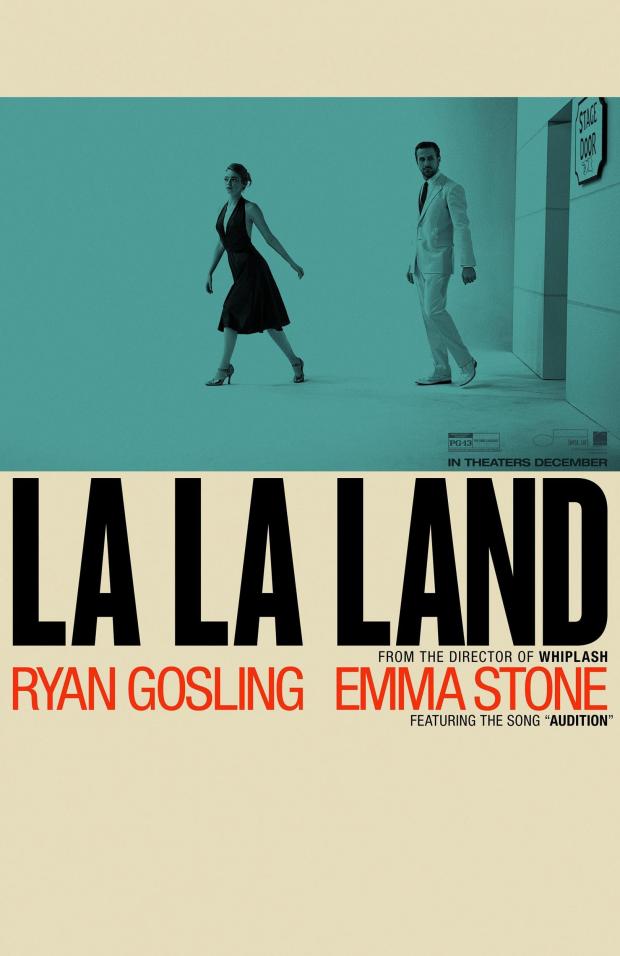
La La Land Successfully Updates A Genre

La La Land is a rare bird, a genre musical film— refreshing and uplifting, sincere and happy and melancholy, a much-needed anodyne for the darkness and cynicism of late cinema. It tells the story of the meeting of two young people, Sebastian (Ryan Gosling) the musician and Mia (Emma Stone) the struggling actress. Both are working marginal jobs, waiting for their moment to break into the careers they dream of. When they meet (after a few hilarious missteps) love begins to bloom— and in true musical manner, their emotions soar in the form of song and dance. This is what is wonderful about musicals: in their universe emotions cannot be contained by prosaic reality. They require the characters spontaneously burst into song. Narrative reality breaks loose and people levitate into a magical space where people dance in the middle of traffic jams and fly into the stars of a planetarium.

But it’s not all just a cinematic heaven of singing and lyrical passages of fancy: the eternal rival of romance and career soon takes over.  Mia and Seb inspire each other to take risks, work hard and strive to make their personal dreams come true. The cost of pushing career first soon becomes the central conflict of La La Land, which leads to one of the most soaring and beautiful and melancholy and moving conclusions I have seen in a modern film.

The third character own this film— the namesake— is it’s wonderful, make-believe Los Angeles: Angel’s Flight, Mulholland Drive, Griffith Park, palm trees and stately SoCal architecture under an endless blue sky or deep blue night. It’s a fun, vibrant place full of artist, actors, strivers and dreamers. It’s been too easy in films of late to see LA as some of late-capitalist hellscape (see Training Day): It’s refreshing to remind all of us that LA is a place where people still go to try to make their dreams come true.

Director Damien Chazelle’s last film was Whiplash, a sort of crazy stalker film set in the world of jazz music about an earnest drummer and his insane instructor (J. K. Simmons, who has a lovely cameo in this film).  Jazz plays heavily and strangely in La La Land as well: Sebastian is a young man obsessed with the world of jazz: he has posters of jazz greats in his apartments, Hoagy Carmichael’s piano stool and longs to open a real jazz club in Los Angeles. There are plenty of kids these days who passionately love alls sorts of dead or marginal forms of music: it never becomes clear of Seb is sincere or just really good at affecting his love of the genre.

"A Lovely Night" on location.
The most remarkable number— a real masterpiece of a shot— is “A Lovely Night,” which occurs near the beginning of the film. After a party in the Hollywood Hills where they accident meet up, Seb is helping Mia look for her car. They break into song and dance at a scenic overlook, the wash of lights in the LA basin below. The scene, which goes from real-world to singing to dance to tap-dance (!) is shot at the real location and very specific time: PAST “Magic Hour,” just after sunset, when the warm glow of the sunset underscores a deepening dark blue sky. The set lighting is low as to illuminate the actors and still leave the sunset and sky bright. This scene not only highlights the considerable singing acting talents of of Ryan Gosling and Emma Stone, it shows off cutting-edge film technology: fine-grained, fast film stock (La La Land was mostly shot on 35mm film), fast anamorphic lenses and the latest light, agile camera packages. Were this a Golden Age musical, this shot would have happened on a soundstage. But instead, it is one long, six-minute shot at a very narrow, specific time of day. This makes it breathtaking on several levels.

Another nice PAST-magic hour shot.
La La Land is in many ways an updated classic movie, a pastiche of the conventions, narratives and styles of Hollywood musicals. It is not a breakthrough in and of itself: this isn’t pure storytelling and cinematic innovation like Mad Max: Fury Road was. It takes the best elements of a great genre, updates the sensibilities to contemporary morĂ©s and makes it all fresh and unexpected again. There’s a little Vincente Minelli here, some Gene Kelley there, a little Jaques Demy, Even a bit of Ross Hunter/ Doris Day and Paul Thomas Anderson.

Another girl in magical old Los Angeles, dreaming
of acting fame. Naomi Watts in Mulholland Dr.
Given all these obvious movie-history references it was then very, very strange that while La La Land played, the place I kept going to for a visual and stylistic reference was… David Lynch. I COULD NOT STOP thinking: “This is a light-hearted musical version of Mulholland Dr. (2001).” It shares a lot of the same qualities as Lynch’s masterpiece: striking cinematography filled with shots of strong primary colors; an abiding love of Los Angeles locations, show business, actors and the mechanics of filmmaking; flights of surrealism; and intimate close-ups, bursting with emotion. These films are on entirely different missions— light, uplifting musical surrealism versus a surreal dive into the darkest parts of the id— but there is a common thread as well, in look and feel.

I may well be mistaken and La La Land may have been released in the
original CinemaScope aspect ratio of 2.55:1. But that's not how I saw it
in Redwood City: they couldn't even manage to mask the screen right.
And, sorry to say, I have to disagree with both the opening title card and Dana Stevens’ review and report that La La Land is NOT in CinemaScope. That specific film format was proprietary for to 20th Century-Fox and Bausch and Lomb, who standardized the elements of anamorphic cinematography. CinemaScope lenses were not much used past 1960: these early models had distortion problems that caused actors’ faces to widen unnaturally: “CinemaScope Mumps,” they called it. Panavision fixed this problem by re-arranging lens elements to minimize distortion. This film is actually in Panavision: they used Series C lenses to shoot it. But this is a quibble: the widescreen compositions are so lovely and the mise-en-scene is so well developed and rich, it’s worth another viewing just to look for visual clues and symmetries.

If you love Hollywood genres old and new, this is a must-see.

Tuesday, December 29, 2015

Quentin would have been PISSED

With nothing compelling on TV and a movie pass burning in my wallet, I decided to attend a roadshow screening of The Hateful Eight.

I've sort of fallen out with Tarantino lately, what with his ardent passion for turning junk movies from the past into faux-junk cinema and utter devotion to pointless nihilistic gore and over-the-top vengeance stories. It's all part of his huge movie-geek thing-- but something of substance DID come out of it. The man cares about old-school widescreen cinema: so do I. That's where our Venn diagrams intersect.

He went through an extraordinary amount of trouble to create a roadshow release of The Hateful Eight. The last film I remember seeing in a proper roadshow release was Apocalyse Now, a credits-free 70mm screening with a program provided. The Hateful Eight goes a few steps better, with a musical overture, intermission and a three-hour program length.

At least, that's what I understand is supposed to happen.

The fun part: going out with a big ol' 65mm
camera and shooting cool lens flares.
December 28th's  last screening was supposed to start at eleven at the Daly City 20. I got there early, paid the $3 up-charge and staked out a seat near the screen, pleased they had curtained it for crazy wide 2.76:1 Ultra Panavision. Two young women-- practically the only female-only party in a half-full show-- stopped on the way in and noted the smell. Sure enough-- this was the fourth screening of the day and Quentin's core audience demographic had filled the auditorium with a heavy, funky, manly fragrance.

11:00 became 11:10, then 11:20. No movie. The floor manager appeared, handed out rain checks and promised we'd be up and running in about ten minutes. At 11:40, he came back and cancelled the show. So, in the end I did NOT see The Hateful Eight-- but I got two movie passes and three roadshow programs out of the experience, so not a total loss.

The floor manager and I chatted just before he called the screening off. Apparently the theater got all the hardware for a 70mm screening just before it was supposed to start. The projector was refurbished, and at the end of the roadshow screening they will haul it away and 2K digital shows would take it's place. The problem was the projector was just plain broken: it simply would not pass the wide film, some sort of mechanical failure. This cancelled screening was not the first one they had to axe either. Roadshow screenings have gone dark all across the US and Canada in regular intervals.

Hey: Quentin Tarantino and The Weinstein Company are trying very hard to give the audience a taste of the widescreen glories of the past, and more power to them for it.  The thing is: they're giving audience a taste of not just that, but the entirety of photomechanical projection technology.

For each of The Hateful Eight roadshow venues they had to ship in a 70mm projector, set it up and align it, and station a projectionist exclusively to handle the thing. (I'm sure they had to bring in flatbed film platters in some places as well, but not Daly City: they still had one Christie system left). These projectors are likely vintage Century or Todd-AO machines they bought used and had mechanically refurbished. But without the infrastructure and expertise to maintain these machines, they break. They didn't break as much in the past because they were so common.

DP70 35/70mm projector.
Back in my movie theater management days a surprising number of theaters I managed had 70mm capability. In the 80s United Artists had the presence of mind to buy up and install a lot of DP-70 Todd-AO projectors made by Phillips/Norelco in the Netherlands in 1955 or so. The reasons for buying up these machines was twofold: they were very solidly made and reliable for regular 35mm screenings, and even the dopiest non-union assistant manager could switch them over to 70mm. Even with dopey non-union assistant managers running the shows, there were technicians available for overhaul and spare parts were in abundance in every projection booth (sometimes even spare projectors). This all made the average screening in the film era a reliable thing.

Nonetheless, there were a lot of moving parts and flying film and things went off the rails all the time. I am personally responsible for destroying a $3000 reel of 70mm: I started a screening of Bonfire of the Vanities in 70mm blow-up (why? WHY?) forgetting to engage the feed platter motor. Reel One wrapped around the hub and was torn to shreds. Fortunately we could switch to 35mm until a replacement reel arrived (and Larry Levin finished yelling at me).

Digital projection has as we all know, transformed the moviegoing experience. For the audience the changes have been subtle: the picture is more steady, screenings more reliable, and unfortunately trailers nearly endless. the films still "break," though, but they do it digitally: It was reported that an opening night screening of Star Wars: The Force Awakens glitched a few minutes in and skipped to the very end of the film. Digital Cinema's most profound change happened in the booth: no moving parts. Films are loaded via hard drive. The roar of the average film projector (which was terrifyingly loud when running 70mm) has been replaced by the hum of cooling fans.

Like I said, big praise for Tarantino for bringing back Ultra Panavision, but it's a kind of stunt, like wiring theater seats to shock people. My cancelled show was part of this whole retro-technical stunt rather than the continuum of modern Digital Cinema technology, and as such none of the backups were available. There was no 35mm print backup or a spare digital projector. He's giving people a taste of the old film days, but it's so late after the passing of this technology it's definitely a double-edged sword. Part of this is sheer hubris: it's easy and cool on the front end to go out and shoot a film with 65mm Panavision cameras and hand-restored 1.25X anamorphic lenses. On the back end it's not so easy: conforming 100 theaters to a nearly dead film format is a tall order indeed, a stunt not as easily pulled off.

So I'm gonna try again soon to see another roadshow screening, but this time I'm going to a theater that isn't in the sticks (Daly City: I'll bet they installed the less reliable refurbished projectors in the outliers). Sheer law of averages means next time the projector will light up.
Tuesday, June 11, 2013

Kubrick at LACMA

I managed to rush down to Los Angeles to visit the Stanley Kubrick exhibit at the L.A. County Museum of Art before it closed at the end of the month. It was a bit of a pain to get everything to work out on short notice, but the payoff far outweighed the cost.

The Kubrick exhibit takes up the first floor of the Art of The Americas hall, and is arranged like all good museum retrospectives: chronologically, starting with an overview, a short visit to his earlier works, and on chronologically through his highly singular ouvre to Warsaw Diaries, a project he was just in the early stages of researching when he died.

There are a few situational ironies about this exhibit. Stanley Kubrick only shot one film in California: The Killing (1956), his second feature-- and most of that was filmed in the Bay Area, around the former Bay Meadows racetrack in San Mateo. He scrupulously avoided spending time in Hollywood. Los Angeles put on quite a tribute for an outlander-- but then again, it's all one big business. The money that financed his films flowed for the most part out of studio gates. If he was not one of Hollywood's own, then he is widely considered one.

What I found especially pleasing is how hard the curators strove for authenticity in all the sections: there are very few reproductions, aside from amazingly detailed ones, like the model maze from The Shining or the hanging 10-foot model of Discovery One. But Jack Torrance's typewriter and axes, Private Joker's helmet, Barry Lyndon's costume: all the genuine deal. Someone had reproduced the sexy milk-dispensing mannikins from A Clockwork Orange, which struck me as an odd thing to do.

I was very gratified to see that the part of the exhibit concerning 2001: A Space Odyssey was by far the largest in space and number of artifacts. I had read in Piers Bizony's excellent, definitive book 2001: Filming The Future that Kubrick had deliberately destroyed the sets, props, spaceship models and costumes after wrapping 2001 to keep them from being used in cheesy sci-fi films afterward. (This happened to George Pal's Forbidden Planet (1956): those crazy grey jumpsuits showed up on TV shows well into the 1960s, as did Robbie the Robot). I was amazed even a little of it survived.

We visited LACMA on a Friday: there was a comfortable amount of other visitors there, no real crowding. Therefore, I was able to take as much time as I wanted in the Kubrick exhibit. I circled around and took it all in again.

It was an incredible culmuination for me. It was nothing short of awe-inspiring to be in the presence of the artifacts of Kubrick's works. It allowed me to slip through the gossamer veil of the cinema screen: while you're in there, among the hand-written script notes and props and lenses, you're on Kubrick's side of the camera. You stand with Kubrick, see what he saw and wrote and imagined. A powerful, unforgettable experience.

If you missed this retrospective, feel free to kick yourself.
Outside the exhibit space.


A dark room just inside the entrance. It shows side-by-side clips from his films,
one side overlaid with pithy quotes. This goes a long way to show the
breathtaking span of Kubrick's auteur vision.

This is on the wall just past the main entrance. It makes no sense here.
Makes all kinds of sense once you've gone through the exhibit.

Stuart Freeborn's articulated
Australopithicus makeup.
Part of the 2001 exhibit. The Discovery model is a reproduction: the
Space Station 5 chairs are authentic.


Fairchild-Curtis fisheye lens-- This is HAL's eye, the one they used
in close-ups and as a filming lens for HAL's POV.

They displayed the HAL Lens behind glass, but on both sides. All you have to do
is point your camera up to the back and you could shoot right through it.
This is a picture of me as HAL would have seen it, taken straight through
the Fairchild lens. Just amazing.

An actual production Discovery space helmet. This was Dave Bowman's: He wore it on the first EVA to replace the "faulty"
AE-35 unit, and unfortunately forgot it later on. I stared at this for at least ten minutes: I never, ever thought I'd
see something like this in person.


A detail from a surviving spacesuit costume, one of
the silver ones worn on the Moon. This is the
data pad, and there is supposed to be a number
of buttons on it. They must have fallen out.


There was other stuff there too: Here is Private Joker's helmet from
Full Metal Jacket. His gold wire-frame glasses were on display just
below as well.

All work and no going to LA to see a once-in-a-lifetime
museum retrospective make Jack a dull boy. The actual prop
Adler typewriter from The Shining.

Monday, October 8, 2012

The Ultimate Recursive Movie

The Cinerama film festival did not actually close October 4th with How the West Was Won: the festival folks had special unannounced treat for the widescreen cinema fans in attendance that night.

In The Picture (2012) is a brand-new 30-min film shot in actual 3-strip Cinerama, the first since 1962. David Strohmaier, a film editor with an abiding love of old film formats and one of the organizers of the Cinerama film festival, got hold of a Cinerama camera, had it rebuilt, got Fuji to donate some filmstock, and set out to to make a travelogue.

The results were delightful and quite spectacular. In the Picture closely follows the structure of Cinerama Holiday (1955), which was framed around two couples traveling around and seeing wonders in the US and Europe. But since In The Picture was made on the cheap, it used inexpensively accessed locations around Los Angeles-- Griffith Park Observatory, Angel's Flight, Mullholland Drive, etc.

Shooting In The Picture. Note the three film magazines.
This rig weighs over 200 pounds and required three
car batteries to drive all three mags.
The film features two stars from How The West Was Won: Stanley Livingston (Chip Douglas from "My Three Sons") and a cameo by Debbie Reynolds. It even emulated the stilted dialog style of Cinerama Holiday-- though that might have more to do with working with a vintage Cinerama camera. It was usually placed about two feet from the actors for medium shots and, not being blimped, made an unholy racket.

Recursion is when an element repeats into itself, a potentially endless loop.The recursive thing I was referring to was the ending of In The Picture, and it was uncanny-- and a little spooky, as it occurred on several levels, each more directly recursive than the next:

TOP LEVEL RECURSION - At the end of Cinerama Holiday the two couples go to the Warner Theater in New York, buy tickets to Cinerama Holiday, and see themselves on the big wide screen. In The Picture, faithful to the source, ends the same way, with the four actors buying tickets in the Arclight lobby, going to the Dome and seeing themselves. So far this is a familiar movie trick: I seem to remember Buster Keaton doing it. However:

DEEPER RECURSION - In The Picture was shot just a few months ago. It is very, very strange to see the exact same place Daniel and I were sitting in displayed up on the big screen, especially in outlandishly huge 3-strip Cinerama. The same ushers and ticket-takers we saw in the lobby were extras in this sequence, and the four actors sat down in the same section we were seated in. Not a little unsettling.

A still I took of In The Picture as it was being screened at
the Cinerama Dome. By coincidence, when the actors
see themselves on screen, this is the scene they see.

EVEN DEEPER RECURSION - During this screening, In The Picture's four principal actors were in attendance-- seated all around us, in fact. The movie had already invaded our intrinsic reality: with the actors there it was literally sharing our air. (This is my reaction, of course: I understand that if you live in LA this sort of thing happens all the time.)

DEEPEST RECURSION - The 30-minute short was followed by the screening of 15-minute video documentary called "The Last Days of Cinerama," which was about… The making of In The Picture. Daniel and I fully expected this doc be followed by a 7-minute short about the making of "The Last Days of Cinerama"-- but it was getting late, Dan had to work the next day, so we didn't stick around to find out.

Saturday, October 6, 2012

The Wide, Wide West

It takes a good reason to get someone to drive 325 miles to see a movie. But if the reason is site-specific AND rare, you gotta make the trip. And so I attended the final days of the 60th Anniversary of Cinerama festival in Hollywood at the Pacific Cinerama Dome, one of only three theaters left in the world equipped to show the process.

The festival closed with a screening of How The West Was Won (1962), a star-studded* epic depicting 50s-era "manifest destiny," the American expansion west. It was one of only two narratives shot in Cinerama, a widescreen visual process that utilizes three strips of film set at angles that give a startling 146° angle of view. It was specifically designed to be shown on a deeply curved screen, which rectifies the wide angle of the collective image in an equally startling way. So when you watch a Cinerama movie the perspective seems amazingly natural, and you follow the action by turning your head, like you would in the real world. Conceptually, it's uncanny.

Practically, however, there are some strange limitations to the process. The seams between the triptych panels are never invisible: the optics of the time (Cinerama cameras were built in the early 1950s) couldn't make the edges blend perfectly. In How The West Was Won the filmmakers took great pains to hide the seams: they would position the actors so they were center in each lens, and often buildings or trees would coincide with the frame edges. One sequence near the end takes place in the interior of a house in Arizona: the wallpaper was a combination of little flowers, grey vertical stripes, and more grey vertical stripes. The frame edges were lost in a sea of stripes: Cinerama wallpaper.

An idea of just how wide the image is-- a frame from
HTWWW, probably a CinemaScope reduction print.
The seams are plainly visible, and you can see that each strip
is actually a tall rectangle.
Ultimately, the Cinerama process is so singular and unusual that it holds the narrative hostage. Since the cameras had only one set of lenses, close-ups were impossible. Medium shots were achieved by having the actors stand less than two feet from the camera, and even then the vastness of the settings dominated the frame. The overarching problem is the style of storytelling employed by the directors (yes, there were four directors): These old Hollywood pros came up in the Academy Format days, and it is obvious they were in their comfort zone with a single focus of action in each scene. An actor will talk: the other actors will look on blankly, as if they thought they were out of frame. So there is a lot of standing around and listening with the cast of this film. Even the wide-screen action sequences tend to have a stubbornly singular core of interest (be it a spectacular train wreck or a spectacular buffalo stampede). This center-of-frame emphasis tends to deaden the compositions, as richly designed as the sets were or amazing the location: They became just so much scenery.

(According to some commie social commentary I've read, regarding nature as "scenery" is a hallmark of bourgeois capitalism, the first step to the commodification of natural resources. That idea fits well here.)

Some folks have released HTWWW in "smilebox" format,
with a curvature added digitally.
This is how a medium shot works in Cinerama.
It took a new generation of filmmakers and a change in visual narrative language to get widescreen cinema to work more naturally. Mise en scene narrative, which uses the entirety of the cinematic canvas, sometimes in multiple centers of action over a widescreen frame, was just being defined at the time HTWWW was released. It would take visionary filmmakers like Stanley Kubrick, Jaques Tati and Blake Edwards to really open up the widescreen frame to it's unique storytelling potential.

With all of it's faults, HTWWW and Cinerama is still a marvel to behold. This film just does not work on video, HD or not: it does not even work in 'scope on a movie screen. It specifically designed for one and only one projection process, and I consider myself fortunate to have see it in it's proper grandeur.

*I picked out Harry Dean Stanton in an uncredited bit part as one of Eli Wallach's henchmen. How old IS that guy?

Tuesday, October 18, 2011

Just Seen: The Tingler

Halloween is closing in again, and on cue the cable nets are loaded up with horror films. Actually, I'll say the spooky season was kicked off quite well by last Sunday's season 2 premiere of "The Walking Dead" on AMC. A very impressive, excruciatingly tense 90 minutes. The only thing that let the air out of a fine evening of zombie action was the increasing tempo of commercial breaks, which started hitting every ten minutes or so in the third half. I guess they had to capitalize on the buzz-- and were rewarded with the best ratings for any AMC show so far.

Up-dial a bit, I got a chance to catch The Tingler (1959) last night on TCM, in finely transferred HD. It was part of William Castle's most successful cycle of gimmick-driven horror films, along with House On Haunted Hill (1959) and 13 Ghosts (1960).

Quite a few years ago, I got to see The Tingler in a revival house in San Francisco in an auditorium wired for "Percepto," the sensory gimmick from the original release. And by gimmick, I mean several buzzers wired into selected seats. When the blackout part hit ("The tingler is loose the the theater! Scream as loud as you can!"), the buzzers were turned on (along with, for added terror, a Van Der Graff generator throwing out blue sparks under the screen) and all the hipsters in the house reliably screamed their heads off.

No Percepto last night (though I did watch it a little buzzed) so I got to dig into the film's plot. It was written (along with the other two) by Robb White-- and it's obvious the poor guy had William Castle hovering over his typewriter the whole time. a few super-weird plot motifs popped out in this screening:

• Strange family relationships. Vincent Price (in his skinny-moustached prime) plays Warren Chapin, a pathologist. As the story opens he is conducting an autopsy on an executed criminal. Ollie, the executed guy's next of kin, plays a pivotal role in the story that follows. Dr. Chapin is married to Isabel, a gold-lamĂ©-wearing trollop. She's an heiress who refuses to share her wealth with her good-hearted younger sister Lucy, who also lives with them. Lucy is going steady with David, who is played by Darryl "Dobie Gillis" Hickman and who Dr. Chapin considers a son to him. Everything that happens not directly Tingler-related involves the baroque, complex and hateful dynamics of this family unit.

• Weird plot holes. Dr. Chapin's trollop wife Isabel, a fairly important character, vanishes from the film at about the two-thirds point-- no real reason given. Vincent Price greets this development with a shrug, and the film continues.

• Time wasters. Aside for the long scream-filled blackouts at three points in the film (which are cheap to shoot!) We're also treated to an extended sequence in the silent-film theater (before the Tingler gets loose in it) of Tol'able David (1921). This was a wheezy melodrama featuring Richard Bartholomess about a mistreated bumpkin who gets his big shot a manhood when he gets to deliver a mailbag. For the most part, films-within-films usually make some sort of thematic commentary to the overarching narrative. Not this time. It was probably a way William Castle could add four minutes or so of length to his movie (which was shot in two weeks) and he didn't give a damn if it informed the plot or killed it dead.

Even with it's manifold faults, The Tingler is a genuinely creepy film, with a clever bit of color in the scariest part. There is an almost Lynchian despair and strangeness to the thing, an effect that lingers well after the last 50's teenager screams. it doesn't hold up well, but it holds up.

Thursday, February 17, 2011

Rama Lama Ding Dong: The DVD

Just a few days a go a real treat landed here at my day job (authoring DVDs and BluRays): a 3-disc Doo-wop concert series.

I can't go into too much detail, because of the whole professional confidentiality deal, but the disc set is one of those public television promotional titles, the kind you'll get if you pledge some determined amount. The first two discs are all relatively recent oldies-tour performances by original 1950s artists, which is a treat in itself when you watch some of these solidly senior senior citizens belting out songs like they were still teenagers-- like septuagenarian Jay Black holding, holding, holding the high notes on "Cara Mia."

The Shields.
But the fun part was the third disc, a wad of old kinescopes of original 1950s doo-wop acts, mostly culled from the old Philadelphia "American Bandstand." It completely embodied the complete bafflement, mentioned earlier, that the powers of media had with new music.

The Flamingos.
In song after song in the compilation, the Doo-wop groups deliver the goods in increasingly weird stage settings. The Shields sang "You Cheated, You Lied" dressed as naval officers at the wheel of a tall-masted ship. The Flamingos delivered a performance of their hit "I Only Have Eyes For You" in winter gear, next to a faux frozen pond. The lead singer looked quite bewildered throughout.

(note: I'd LOVE to uploads clips of this stuff, rather than just describe them. But I'd get in in sooooo much trouble. If I ever find them already posted, I'll update with links. But stills are OK-- That's more like free publicity.)

The Skyliners.
I'll assume you've all heard "Since I Don't Have You," the 1958 hit by The Skyliners, right? It's a slow, soaring Doo-wop ballad (covered by Guns n' Roses and Buckaroo Banzai). It's not hard to have a mental image of this song as a cool, sophisticated urban tune, infused with a Steel City street-corner vibe. So seeing them dressed like extras from "Bonanza," shuffling in hesitation step through a hyper-detailed Old West Saloon set (complete with balcony) is strange on an almost extraterrestrial level.
The studio audience.
The buttons they're wearing are for
a Beech Nut Gum ad campaign--
which explains why they were all
chewing like a bunch of ex-smokers.


And the studio audience of Philly teens had a hard time getting it too. In several of the performances they could be heard clapping along in "white" up-beat and "black" down-beat at the same time, combining for a dissonant double-time clap-CLAP-clap-CLAP syncopation.

These days, nobody of any ethnic affiliation would be caught dead clapping on the upbeat. Except in Disneyland. When I went there as a kid with my friend K. David (the talented guitarist who turned me onto this super-odd Rolling Stones promo), he would bedevil the tourists by insisting we all hit the 2 and 4 during the robotic entertainments. It never turned the crowd, but maybe it got them thinking.

I've always liked this old music. But I like music in general, and some new stuff (like "Fuck You" by Cee-Lo Green) is amazing. Was it better music? Can't say, but I saw a rather poignant YouTube comment on the Skyliners song that gave me pause: "I wish I was a teenager in the 50's and 60's, I cant tell you enough how much it sucks to be 17 right now when all the music around you is crap and the cars look ugly as hell and are all plastic and the styles are all junk." I said the same thing back in 1978, so I can relate.