Showing posts with label celebrities. Show all posts

Sunday, December 25, 2016

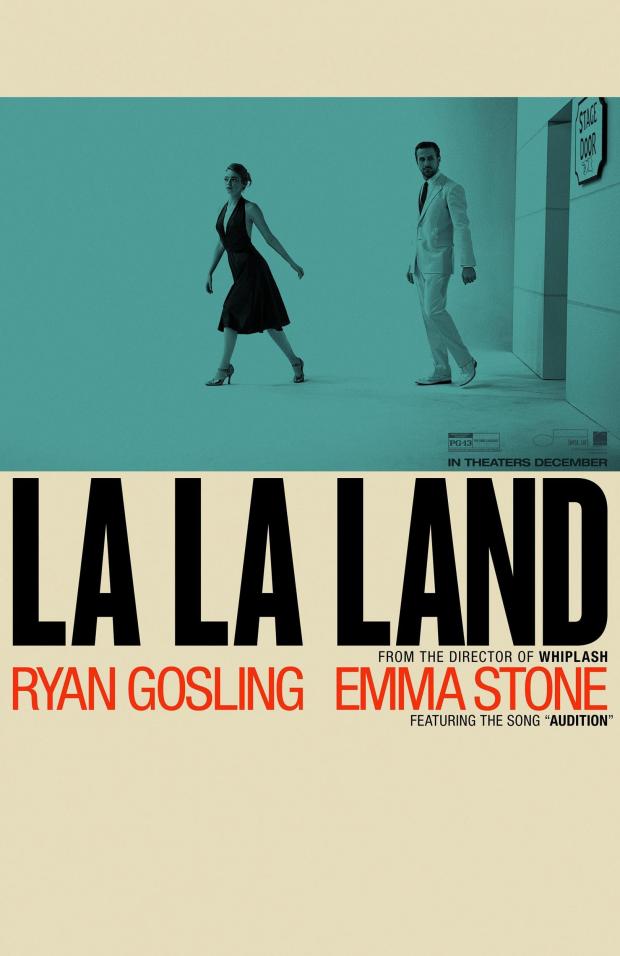
La La Land Successfully Updates A Genre

La La Land is a rare bird, a genre musical film— refreshing and uplifting, sincere and happy and melancholy, a much-needed anodyne for the darkness and cynicism of late cinema. It tells the story of the meeting of two young people, Sebastian (Ryan Gosling) the musician and Mia (Emma Stone) the struggling actress. Both are working marginal jobs, waiting for their moment to break into the careers they dream of. When they meet (after a few hilarious missteps) love begins to bloom— and in true musical manner, their emotions soar in the form of song and dance. This is what is wonderful about musicals: in their universe emotions cannot be contained by prosaic reality. They require the characters spontaneously burst into song. Narrative reality breaks loose and people levitate into a magical space where people dance in the middle of traffic jams and fly into the stars of a planetarium.

But it’s not all just a cinematic heaven of singing and lyrical passages of fancy: the eternal rival of romance and career soon takes over.  Mia and Seb inspire each other to take risks, work hard and strive to make their personal dreams come true. The cost of pushing career first soon becomes the central conflict of La La Land, which leads to one of the most soaring and beautiful and melancholy and moving conclusions I have seen in a modern film.

The third character own this film— the namesake— is it’s wonderful, make-believe Los Angeles: Angel’s Flight, Mulholland Drive, Griffith Park, palm trees and stately SoCal architecture under an endless blue sky or deep blue night. It’s a fun, vibrant place full of artist, actors, strivers and dreamers. It’s been too easy in films of late to see LA as some of late-capitalist hellscape (see Training Day): It’s refreshing to remind all of us that LA is a place where people still go to try to make their dreams come true.

Director Damien Chazelle’s last film was Whiplash, a sort of crazy stalker film set in the world of jazz music about an earnest drummer and his insane instructor (J. K. Simmons, who has a lovely cameo in this film).  Jazz plays heavily and strangely in La La Land as well: Sebastian is a young man obsessed with the world of jazz: he has posters of jazz greats in his apartments, Hoagy Carmichael’s piano stool and longs to open a real jazz club in Los Angeles. There are plenty of kids these days who passionately love alls sorts of dead or marginal forms of music: it never becomes clear of Seb is sincere or just really good at affecting his love of the genre.

"A Lovely Night" on location.
The most remarkable number— a real masterpiece of a shot— is “A Lovely Night,” which occurs near the beginning of the film. After a party in the Hollywood Hills where they accident meet up, Seb is helping Mia look for her car. They break into song and dance at a scenic overlook, the wash of lights in the LA basin below. The scene, which goes from real-world to singing to dance to tap-dance (!) is shot at the real location and very specific time: PAST “Magic Hour,” just after sunset, when the warm glow of the sunset underscores a deepening dark blue sky. The set lighting is low as to illuminate the actors and still leave the sunset and sky bright. This scene not only highlights the considerable singing acting talents of of Ryan Gosling and Emma Stone, it shows off cutting-edge film technology: fine-grained, fast film stock (La La Land was mostly shot on 35mm film), fast anamorphic lenses and the latest light, agile camera packages. Were this a Golden Age musical, this shot would have happened on a soundstage. But instead, it is one long, six-minute shot at a very narrow, specific time of day. This makes it breathtaking on several levels.

Another nice PAST-magic hour shot.
La La Land is in many ways an updated classic movie, a pastiche of the conventions, narratives and styles of Hollywood musicals. It is not a breakthrough in and of itself: this isn’t pure storytelling and cinematic innovation like Mad Max: Fury Road was. It takes the best elements of a great genre, updates the sensibilities to contemporary morés and makes it all fresh and unexpected again. There’s a little Vincente Minelli here, some Gene Kelley there, a little Jaques Demy, Even a bit of Ross Hunter/ Doris Day and Paul Thomas Anderson.

Another girl in magical old Los Angeles, dreaming
of acting fame. Naomi Watts in Mulholland Dr.
Given all these obvious movie-history references it was then very, very strange that while La La Land played, the place I kept going to for a visual and stylistic reference was… David Lynch. I COULD NOT STOP thinking: “This is a light-hearted musical version of Mulholland Dr. (2001).” It shares a lot of the same qualities as Lynch’s masterpiece: striking cinematography filled with shots of strong primary colors; an abiding love of Los Angeles locations, show business, actors and the mechanics of filmmaking; flights of surrealism; and intimate close-ups, bursting with emotion. These films are on entirely different missions— light, uplifting musical surrealism versus a surreal dive into the darkest parts of the id— but there is a common thread as well, in look and feel.

I may well be mistaken and La La Land may have been released in the
original CinemaScope aspect ratio of 2.55:1. But that's not how I saw it
in Redwood City: they couldn't even manage to mask the screen right.
And, sorry to say, I have to disagree with both the opening title card and Dana Stevens’ review and report that La La Land is NOT in CinemaScope. That specific film format was proprietary for to 20th Century-Fox and Bausch and Lomb, who standardized the elements of anamorphic cinematography. CinemaScope lenses were not much used past 1960: these early models had distortion problems that caused actors’ faces to widen unnaturally: “CinemaScope Mumps,” they called it. Panavision fixed this problem by re-arranging lens elements to minimize distortion. This film is actually in Panavision: they used Series C lenses to shoot it. But this is a quibble: the widescreen compositions are so lovely and the mise-en-scene is so well developed and rich, it’s worth another viewing just to look for visual clues and symmetries.

If you love Hollywood genres old and new, this is a must-see.

Monday, October 10, 2016

Donald Trump and Hollywood Omertà

Many people have seen, or at least read about, the now-infamous “hot mic” tape of a candid conversation between Donald Trump and Billy Bush in September 2005. News outlets and the internet are currently saturated with analysis of the content of this tape, in which Trump admits that his money and power permits him to commit sexual assault. The astounding crudity of the verbal exchange was seen as revealing the true nature of Donald Trump’s personality and attitude towards women, and the revelation of this tape may well prove to be the tipping point of the 2016 presidential election.

But this article isn’t about the content of the tape: it’s about why it took so long for it to be released. This is the part of this incredible story that seems to be under-discussed— and it relates directly to Hollywood, which is why it’s being discussed here.

The official story is the producer of “Access Hollywood,” Steve Silverstein, remembered this interview about two weeks before the release and dug the footage out of archives. This story is almost certainly false. The reason why it’s not believable is actually embedded in how the tape was recorded.

This political bombshell (more of a nuclear warhead) was taken from a segment of “Access Hollywood” which documented a cameo Donald Trump was making on the soap opera “Days of Our Lives.” It was shot on the backlot of NBC Studios in Burbank. A camera crew was following Trump and “Access” host Billy Bush: both men were fitted with lavalier microphones and transmitter packs which broadcast RF signal to receivers attached to the camera. During the publicly-released segment a cameraman had stepped outside the bus to set up a shot showing Bush and Trump arriving at the studio to be greeted by soap star Arianne Zucker. Thinking they were off-camera, the two men engaged in a crude, degrading conversation about women. Aside from the on-camera personalities there were seven people involved in this taping: two cameramen, the segment producer, a production assistant, Trump’s bodyguard and PR person, and the bus driver.

After this segment was shot, the footage was likely seen and handled by even more people: on-line and offline editors, more show producers, audio technicians and maybe even an archivist.

Charlie Chaplin, during one of his
many, many court appearances.
So about a dozen people— very likely more— heard and saw this footage in 2005. Yet NONE of these people recalled this conversation, one of the most devastating revelations of character any political aspirant has ever uttered? Particularly as this 2005 taping came on the heels of complaints by the cast and crew of Trump’s show “The Apprentice” about his crude on-set behavior? That is an impressive case of collective amnesia.

Hollywood’s code of silence strikes again.

The film industry has been creating and controlling secrets since the days of Charlie Chaplin (and Lita MacMurray) and Fatty Arbuckle (and Virginia Rappe). The studios all had (and still have) well-funded departments which handled public relations and “fixers,” producer-level executives who specialized in keeping indiscretions out of the press. (Hail Caesar was a thinly fictionalized account about a famous studio fixer.)

The culture of secrecy goes very deep in both the film and TV industries. Entertainment is an unusual industry in that the general public is constantly and intently curious about it. Supermarkets do not devote shelf space at the checkout counters with magazines dishing the dirt on astrophysicists and farmers, after all. Scripts and storylines have to be kept secret: details of film shoots are kept from public view as much as possible as well. The need for confidentiality rivals the Pentagon’s.

It’s all for the greater glory of the Industry, of course. That, and jobs. A scandal that would bring down a star would shut down production. A leaked script would kill off box-office potential. Finally, there’s the prestige factor: being on the set gives even the lowest PA or grip access to some of that rare stuff, Hollywood Glamor— stacks of non-disclosure agreements are willingly signed to gain access to that inner circle.

Why did this revelation take so long to emerge into the light of public scrutiny? The culture of Hollywood, a full century of studio secrets kept, reputations protected, indiscretions hidden. And they are so good at it: Did you know that Tom Cruise is only 5’7”? It took a LOT of will to overcome that much inertia and tradition.

Friday, December 19, 2014

North Korea Now Runs Hollywood

The Sony Pictures hacking and shut-down of the release of The Interview is the first truly successful cyber-attack-- and one of the most remarkable events in media history.

This is not the first time this has happened: In 1976, an extremist group staged an attack in Washington, DC to prevent the release of Mohammad: Messenger of God. They believed (without having seen the film) that Anthony Quinn was playing The Prophet on-screen, a depiction forbidden by Islamic law. He wasn't, of course-- but the premiere got pulled and the movie never recovered.

As a cyber-attack, the timing and roll-out was breathtakingly effective. They got into Sony's system via stolen admin passwords, pulled out every juicy document and let Gawker and TMZ do the rest. Only after the damage was done did the hackers state their intentions: Cancel The Interview, or else. Distributors freaked out and cancelled bookings: Sony was so demoralized by then they just went ahead and pulled it. I would not be surprised that we find out later that there were direct extortion attempts between the hackers and Sony execs even before the leaks started.

All you see of Mohammad in this film
is the end of his camel-driving stick.
This is one long bad event for everyone it has touched: Bad for Sony Pictures and everyone mentioned in every catty email. Bad for Hollywood in general. Bad for free speech. Bad for the US government, which needs to create a proportional response to this attack. It's even bad for North Korea, who did the goddamned thing in the first place-- and will catch hell for it. Point-to-point:

• The behavior of Sony Pictures in this whole episode has been nothing short of completely typical Hollywood: Fearful, herd-following and craven. Obama himself said canceling the release of The Interview was a mistake. Craven-- but not out of character.

The Interview is now fully and officially buried: All press materials and trailers have been withdrawn from public access. The hackers got everything they asked for, and then some. People are calling Sony spineless for caving to an unseen, unknown hacker threat, but really I see no deviation from how Hollywood usually works. As an example, it came to light today that Paramount has ordered the next Star Trek movie reworked to be more like, you know, Guardians of the Galaxy. Yikes.

The socialist-realist style poster for The Interview.
hilarious.
In a perfect world, a world where the brave people stand courageously for their principles (like most of the characters in the comic book movies that are keeping the lights on in most Hollywood studios) Sony would have told the hackers to fuck off, and seen-- as most of us can conclude-- that the threats to moviegoers had no real credibility, and released the film. But even if these feckless execs grew spines, the movie was doomed: Sony does not control distribution. Theater chains have everything to lose and nothing to gain if something bad happens during a screening of The Interview. Imagine if it actually got released-- it would be a field day for every lone dumbshit out there to call in a bomb threat for the sheer fun of it.

• Seth Rogen and James Franco are going to lose most of their shot-calling power for this. They'll still be in movies, but I sincerely doubt if they will have any juice to get anything greenlighted for quite a long time, if ever. All this over a film that early reviews and pre-release reviews called a mediocre and unfunny comedy. It's a shame-- not because they're amazing, magical talents (they aren't) but because the movie that will stunt their careers was so inconsequential.

• This is all and entirely North Korea's doing (maybe with the help of some paid proxies in China, which has experience in such things). But: why do this? Why risk an international incident and retaliation over some dumb comedy with weak prospects? There are two possible reasons:

Scene from The Interview where Kim Jong-un
(Randall Park) gets immolated. quite the laugh riot, no?
1. Western media is easier to access in North Korea than ever. Which means that it is quite possible for the wretched masses toiling under the ruling regime to get a chance to see this film-- a comic take on the assassination of Kim Jong-un. If this regime is in a vulnerable state, even something as frivolous as The Interview could upset the fragile ruling junta.

2. Kim Jong-un, the leader of North Korea who is the target of assassination in this film, is a movie buff. In his youth he would sneak into Japan to go to Disneyland. He knows how powerful movies can be-- and he probably took this film as a sort of personal betrayal.

But why would a sovereign nation even bother to instigate a hack on a private company to specifically force a lame-looking comedy film to go dark?  Because Kim Jong-un isn't Hitler or Stalin or even Mao: He's Tony Soprano. As the late Christopher Hitchens observed, North Korea is run by a "militarized crime family that completely owns both the country and its people." Extortion isn't what nations tend to do-- but it is exactly what gangsters do.

Sunday, October 6, 2013

Gravity: So Good, You'll Never Want To Leave Earth


Who among us has not entertained the idea of being an astronaut? The idea of floating weightless, like a bird or an angel, away from the constant and inevitable downward pull of the earth? Having a job in humanity's final frontier, pushing the limits of human exploration, and even enjoying the mild fame that comes from mentioning at cocktail parties “what do I do? Well, I'm an astronaut.”

I believe they finally made a movie that may disabuse you from this particular career choice.

Don't get me wrong: Alfonso Cuarón's Gravity is an amazing, entertaining, thrilling film. The premise is remarkably simple: two astronauts (Sandra Bullock and George Clooney) struggle to survive in open space when their ship is pounded by a cloud of debris traveling at enormous velocity. Even if you care to classify this as a science fiction film (which it is in the most literal sense of the term) you could say the nemesis is Newton's Laws of Motion.

And quite a nemesis it is. Objects in motion remain in motion: Orbital velocities are considerable. There is not even a universal frame of reference, no up or down, outside the distant Earth, which provides a beautiful and startlingly detailed backdrop. The physics, the space hardware, even the sound were all quite accurate (not 100% accurate, though: read Phil Plait's admitted nitpicking here.) No need for slimy aliens, giant robots or Darth Vader-- All the bad guy you need is in a line from the opening credits: “Life in space is impossible.”

The amount of visual detail in Gravity is astounding.
This may look like a doctored-up production still,
but it ain't.
How simple and glorious is Gravity? Before the feature came the trailer for Ender's Game: thousands of spaceships, slimy monsters, space-suited teenagers, stuff blowing up. It looks absolutely ridiculous.

A few notes:

• First of all, I can guarantee you have never seen anything quite like Gravity: it is visually stunning and entirely unique. Still, could find references and tributes in it, from Cuarón's previous effects-heavy films (like Children of Men, particularly the long one-shot sequences), but to a lot of other science fiction films get a nod as well. 2001: A Space Odyssey, Brian DePalma's Mission to Mars and Apollo 13 are the obvious references: The Wall-E call-out is a little on the unexpected side.

• Sandra Bullock? I love Sandra Bullock (From Speed all the way to The Blind Side) but as a reigning rom-com queen she seemed like an odd choice for this sort of film. Then the scene came where she gains shelter in the airlock of the International Space Station and removes her EVA suit. To quote the Australian sages AC/DC, she was knockin' me out with her American thighs. Hey: it's sci-fi, but Warner Bros. is still trying to sell movie tickets here.

Space debris hits the ISS. The result: more space debris.
These scenes are terrifyingly well-done.
• The first shot alone is worth the price of admission (which can run nearly $20 if you go for the IMAX 3D deal). This shot lasts about 20 minutes, threading all around the space shuttle and the Hubble Space Telescope and the intrepid space-walkers in smooth, continuous motion. When a cut finally happened I could hear a quarter of the audience gasp, as if they all stopped holding their breath.

• Yes, I went big and saw it in IMAX 3D at the Metreon. This film was so well-made for 3D it nearly defies words. Having said that, I'm sure the 2D version would be good too-- because of what you lose wearing those dumb glasses. No 3D process, even if it is in hyper-sharp IMAX, is perfect: there is always a little fringing and image spill, and the stars, which were displayed accurately in configuration and brightness in Gravity-- were washed out. That bummed me out a little.

• Okay, the plot was a little thin and the backstory clunked a bit. This was all made up for by the fact the film was only an hour and half long. This fact alone sold me on seeing it on opening weekend. I was not being forced to sit through some stupid comic book character's origin story, or watch robots beat up on each other, for the Hollywood-typical three long hours.

Go see!

Wednesday, January 9, 2013

33rd Razzie Awards Noms Announced

Taking their usual place of (dis)honor the day before the Academy Awards nomination announcement, the snarkmeisters behind the Golden Raspberry Awards announced the 2012 candidates this morning. Most of 'em are the usual suspects-- but I have to admit this year's five ignominious Worst Picture Noms movies are unusually novel.

Those Worst Movie nominees (and bear in mind, I have seen none of these films):

The Twilight Saga: Breaking Dawn, Part 2
- Alright, it made over $800 million dollars in total BO, but I'll agree that's no reason not to believe it's terrible. It also nailed ten other nominations. There is a reason the Razzie people go after a film like this, one that is crafted for the low expectations of a YA-oriented audience: it has to do with the fanboy nature of the Razzie nominating body. As I have noted before, these are the same folks that thought that The Last Airbender was a worse cinematic affront than Sex in the City 2.

Battleship - Well-deserved. It's one thing to take a line of toys and fashion a franchise of brick-stupid movies out of them. It's quite another thing for an injection-molded plastic board game to be the inspiration for an insanely overproduced effects epic. Okay, they're not different at all, really. Still: why?

Oogieloves in the Big Balloon Adventure - This prefabricated Teletubbies rip-off went down as one of the biggest bombs of 2012: made for $20 million, it took $445,000 opening weekend. It sounds absolutely ghastly, and it garnered some of the funniest reviews I've read in a while.

That's My Boy! - I've mentioned elsewhere that Adam Sandler is getting a bit too old and sour to do his mugging act in his movies anymore. I was proven right and wrong in 2012: he played Jack and Jill in Jack and Jill, so he could both shamelessly mug and be his own dour straight man. In That's My Boy! Sandler plays the estranged, degenerate jailbird dad of Andy Samberg. Adam trots out his gross-out Party Boy persona for this character-- but the problem here is the puckish charm that made this persona at least palatable in past movies is all but gone now. In cases like this, you're supposed to compensate for having a charmless protag with superb, witty writing (i.e. Bad Santa). Nope.

A Thousand Words - This long, long, long-delayed Eddie Murphy film garnered an amazing rating of ZERO percent on Rotten Tomatoes. It was the effective and anticlimactic end of the High-Concent Redemption Comedy sub-genre (Liar Liar, Groundhog Day, Click, etc.).

Back to the Razzie Awards Press release: I read the 2012 noms on the LATimes website, then tried to follow the link to their website. Razzies.com is a terrible, terrible place: crowded, ugly layout, counter-intuitive navigation, infested with ads and pop-ups. I would almost believe it was created to be awful on purpose.

Regardless of the remarkable fecklessness of their web presence, the Razzies serve an absolutely vital function: they're one of the few checks on unbridled ego and hype-induced delusion left in the motion picture industry. The AMPAS, the AFI and MPAA should underwrite the damn thing.

The Razzie Award ceremony is apparently a fun, low-budget affair-- one where actual, A-list nominees sometimes appear. Sandra Bullock showed up for the 2009 awards, accepting her Golden Raspberry for All About Steve. The hilarious part: apparently Sandra walked out toting the original Golden Raspberry Award prototype. The Razzie officials eventually had to ask for it back, in exchange for the standard $1.98 gold spray-painted plastic award.

Monday, October 8, 2012

The Ultimate Recursive Movie

The Cinerama film festival did not actually close October 4th with How the West Was Won: the festival folks had special unannounced treat for the widescreen cinema fans in attendance that night.

In The Picture (2012) is a brand-new 30-min film shot in actual 3-strip Cinerama, the first since 1962. David Strohmaier, a film editor with an abiding love of old film formats and one of the organizers of the Cinerama film festival, got hold of a Cinerama camera, had it rebuilt, got Fuji to donate some filmstock, and set out to to make a travelogue.

The results were delightful and quite spectacular. In the Picture closely follows the structure of Cinerama Holiday (1955), which was framed around two couples traveling around and seeing wonders in the US and Europe. But since In The Picture was made on the cheap, it used inexpensively accessed locations around Los Angeles-- Griffith Park Observatory, Angel's Flight, Mullholland Drive, etc.

Shooting In The Picture. Note the three film magazines.
This rig weighs over 200 pounds and required three
car batteries to drive all three mags.
The film features two stars from How The West Was Won: Stanley Livingston (Chip Douglas from "My Three Sons") and a cameo by Debbie Reynolds. It even emulated the stilted dialog style of Cinerama Holiday-- though that might have more to do with working with a vintage Cinerama camera. It was usually placed about two feet from the actors for medium shots and, not being blimped, made an unholy racket.

Recursion is when an element repeats into itself, a potentially endless loop.The recursive thing I was referring to was the ending of In The Picture, and it was uncanny-- and a little spooky, as it occurred on several levels, each more directly recursive than the next:

TOP LEVEL RECURSION - At the end of Cinerama Holiday the two couples go to the Warner Theater in New York, buy tickets to Cinerama Holiday, and see themselves on the big wide screen. In The Picture, faithful to the source, ends the same way, with the four actors buying tickets in the Arclight lobby, going to the Dome and seeing themselves. So far this is a familiar movie trick: I seem to remember Buster Keaton doing it. However:

DEEPER RECURSION - In The Picture was shot just a few months ago. It is very, very strange to see the exact same place Daniel and I were sitting in displayed up on the big screen, especially in outlandishly huge 3-strip Cinerama. The same ushers and ticket-takers we saw in the lobby were extras in this sequence, and the four actors sat down in the same section we were seated in. Not a little unsettling.

A still I took of In The Picture as it was being screened at
the Cinerama Dome. By coincidence, when the actors
see themselves on screen, this is the scene they see.

EVEN DEEPER RECURSION - During this screening, In The Picture's four principal actors were in attendance-- seated all around us, in fact. The movie had already invaded our intrinsic reality: with the actors there it was literally sharing our air. (This is my reaction, of course: I understand that if you live in LA this sort of thing happens all the time.)

DEEPEST RECURSION - The 30-minute short was followed by the screening of 15-minute video documentary called "The Last Days of Cinerama," which was about… The making of In The Picture. Daniel and I fully expected this doc be followed by a 7-minute short about the making of "The Last Days of Cinerama"-- but it was getting late, Dan had to work the next day, so we didn't stick around to find out.

Saturday, October 6, 2012

The Wide, Wide West

It takes a good reason to get someone to drive 325 miles to see a movie. But if the reason is site-specific AND rare, you gotta make the trip. And so I attended the final days of the 60th Anniversary of Cinerama festival in Hollywood at the Pacific Cinerama Dome, one of only three theaters left in the world equipped to show the process.

The festival closed with a screening of How The West Was Won (1962), a star-studded* epic depicting 50s-era "manifest destiny," the American expansion west. It was one of only two narratives shot in Cinerama, a widescreen visual process that utilizes three strips of film set at angles that give a startling 146° angle of view. It was specifically designed to be shown on a deeply curved screen, which rectifies the wide angle of the collective image in an equally startling way. So when you watch a Cinerama movie the perspective seems amazingly natural, and you follow the action by turning your head, like you would in the real world. Conceptually, it's uncanny.

Practically, however, there are some strange limitations to the process. The seams between the triptych panels are never invisible: the optics of the time (Cinerama cameras were built in the early 1950s) couldn't make the edges blend perfectly. In How The West Was Won the filmmakers took great pains to hide the seams: they would position the actors so they were center in each lens, and often buildings or trees would coincide with the frame edges. One sequence near the end takes place in the interior of a house in Arizona: the wallpaper was a combination of little flowers, grey vertical stripes, and more grey vertical stripes. The frame edges were lost in a sea of stripes: Cinerama wallpaper.

An idea of just how wide the image is-- a frame from
HTWWW, probably a CinemaScope reduction print.
The seams are plainly visible, and you can see that each strip
is actually a tall rectangle.
Ultimately, the Cinerama process is so singular and unusual that it holds the narrative hostage. Since the cameras had only one set of lenses, close-ups were impossible. Medium shots were achieved by having the actors stand less than two feet from the camera, and even then the vastness of the settings dominated the frame. The overarching problem is the style of storytelling employed by the directors (yes, there were four directors): These old Hollywood pros came up in the Academy Format days, and it is obvious they were in their comfort zone with a single focus of action in each scene. An actor will talk: the other actors will look on blankly, as if they thought they were out of frame. So there is a lot of standing around and listening with the cast of this film. Even the wide-screen action sequences tend to have a stubbornly singular core of interest (be it a spectacular train wreck or a spectacular buffalo stampede). This center-of-frame emphasis tends to deaden the compositions, as richly designed as the sets were or amazing the location: They became just so much scenery.

(According to some commie social commentary I've read, regarding nature as "scenery" is a hallmark of bourgeois capitalism, the first step to the commodification of natural resources. That idea fits well here.)

Some folks have released HTWWW in "smilebox" format,
with a curvature added digitally.
This is how a medium shot works in Cinerama.
It took a new generation of filmmakers and a change in visual narrative language to get widescreen cinema to work more naturally. Mise en scene narrative, which uses the entirety of the cinematic canvas, sometimes in multiple centers of action over a widescreen frame, was just being defined at the time HTWWW was released. It would take visionary filmmakers like Stanley Kubrick, Jaques Tati and Blake Edwards to really open up the widescreen frame to it's unique storytelling potential.

With all of it's faults, HTWWW and Cinerama is still a marvel to behold. This film just does not work on video, HD or not: it does not even work in 'scope on a movie screen. It specifically designed for one and only one projection process, and I consider myself fortunate to have see it in it's proper grandeur.

*I picked out Harry Dean Stanton in an uncredited bit part as one of Eli Wallach's henchmen. How old IS that guy?

Friday, September 21, 2012

Kickstarting Indies To The Curb

This a few days old, but my old writing partner turned a post from Deadline Hollywood, Nikki Finke's website, which was quite an eye-opener. It concerns Kickstarter, a very cool website where people can crowdsource funding for various creative projects.
Charlie Kaufman and his producing partners ― former Community showrunner Dan Harmon and Dino Stamatopoulos ― do not want to deal with Hollywood, and now at least for one project they don’t have to. A stop-motion animation adaptation of the Kaufman-written play Anomalisa raised $406,237 for the film’s production in 60 days via the crowdfunding website Kickstarter. “We want to make Anomalisa without the interference of the typical big-studio process,” according to a pitch video that Harmon and Stamatopoulos’ Starburns Industries put up on the project page. The film raised more than double the money the producers were asking from 5,770 Kickstarter backers.
These guys broke the Kickstarter record for film funding. Surprised? Not me. Is this good news? Not really. I was wondering how long something as wonderful as Kickstarter could last.

Kickstarter was specifically designed to give filmmakers outside the industry access to funding. Don't get me wrong: Kaufman and Harmon and Starburns have every right to use Kickstarter. But they shouldn't. Anyone with CAA-level representation and the ability to take meetings at a studio shouldn't. Basically, anyone with recognizable star power shouldn't.

Why not? Because they have an unfair advantage over the vast majority of other projects seeking funding. If I was some starry-eyed fellow with $1000 to give away on a film project, and I had to choose between giving it to an indie project written by John August with Johnny Depp penciled in for a cameo versus a digital feature written by Elmo Nobodyski from Rustbeltville featuring Jane Nobody, guess who gets my money? Which contribution gives me bragging rights, Hollywood cache and a T-Shirt with a star on it? Pretty obvious choice.

Celebrity--  admiration for sports heroes, movie stars, political heavyweights, what have you-- exists because it's a basic component of human social behavior, a deep part of our collective brain wiring. Throughout history and undeniably before it, people have always created hierarchies-- even when they aren't needed. We seek out great men or great women to personify our values and channel our aspirations.

This is why it is risky to invest millions of dollars in a movie with no recognizable stars. (And yeah, Pixar does this all the time, but they're a solid brand, which is a form of non-individual celebrity.) And this is why, even if an indie film on Kickstarter may be a superior idea to one offered by a Hollywood insider, it'll never outdraw it in terms of funding.

Kickstarter is a zero-sum game. There are only so many investors with so much money they're willing to donate. If the trend continues, and any Industry pro with the itch goes to Kickstarter to raise money for pet projects rather than ask a studio or (God forbid) use their own money, the long shadow their celebrity casts will make all the truly independent film projects offered seem that much dimmer.

The thing that makes Kickstarter wonderful is it's basic attitude of altruism. Donations are made to creative efforts of all kinds where the donor expects nothing in return but the satisfaction of giving a leg up to a project they feel is worthy. The presence of celebrity-driven projects debases this altruism: Even if donors get no return on financial investment, they get something back: the intangible return of celebrity association, a very real claim that some of the fame they contributed to rubbed off on them. This weakens Kickstarter's mission of creative altruism-- a plain example of Gresham's Law, bad money driving out good.

This couldn't happen, right? A bunch of Hollywood operators couldn't monopolize something as inherently democratic as Kickstarter, right? If I recall, The Sundance Film Festival was supposed to be a showcase for independent filmmakers. But the Industry discovered it-- and now Park City is not much more than an outlier of the TMZ, so insular that an alternative festival (Slamdance) had to be created to give indie filmmakers any sort of chance. So yeah, it can definitely happen again.

Tuesday, August 7, 2012

I recall seeing Total Recall, totally

Colin Farrell, getting his
vacation on.
Got a chance to see the new Total Recall at a late screening. Positive I was the only paying attendee: the few other patrons wandered in after start time, a sure indicator they crept in from other auditoriums.

The reboot of Total Recall made $26M opening weekend, less than the third weekend of The Dark Knight Rises. Considering the film's $125M budget, that's bad news. Many interesting theories as to why this happened, the best being the idea that few moviegoers can be convinced to pay for a film they have already seen. Personally, I see the dark, tentacled hand of The Martian Curse at play. The original is one of the few films set on the Red Planet to see huge success: The remake, scrupulous to avoid this pitfall, is entirely set on earth. Now it seems obvious the Martian Curse was not avoided in 1990: It was merely delayed 22 years.

A wonderfully badass John Cho (Harold and Kumar)
is the Rekall operator in the remake. His part was played by
Ray Baker (one of my favorite character actors)
in the original.
What struck me watching this new version was how absolutely strange both these films are from a moral and political level. The premise (and I'm ••• spoiling ••• here for the 45 people out there who have never seen the original) is this: in a vaguely totalitarian future a man, dissatisfied with his mundane life, purchases a virtual vacation that is indistinguishable from reality. In this fantasy, his loving wife becomes a deadly enemy: his goal, the destruction of the government. Imagine taking a Sandals-style immersion vacation where the big draw is shooting your spouse and killing the President of the United States.

I thought it would be fun to compare the original and the remake point-to-point:

DIRECTORIAL STYLE
1990 – Paul Verhoeven had skills which made TR 1990 memorable: clean, obvious (maybe too obvious) storytelling skills; a delight in weird, gory effects; strong colors and and a sense of ironic fun. Verhoeven played with ideas of what was true and what was fictional in all his previous American films (especially Starship Troopers, a propaganda film from a fascist future, an ironic twist which flew over the heads of most).

2012 – Fremont's own Len Wiseman must have been Columbia's perfect choice for this property: He knows how to work with effects, has a dark, fast-action, dynamic style, and showed he can helm a tentpole picture with Live Free or Die Hard (2007). But the underwhelming box office for this film indicates Mr. Wiseman was probably not the sole author of that film's success: Live Free had a tight story (it took nearly a decade to write) and a star (Bruce Willis) with three to four times the charisma than Colin Farrell.

(I am going to ding Mr. Wiseman for a very annoying tic he uses in Total Recall, one he blatantly stole from J. J. Abrams: At every opportunity he shines light into the lens, smearing lens flares like 4th of July fireworks. Making audiences squint until teary-eyed is not good cinematography, Len.)

PLOT DETAILS
1990 – Verhoeven had a superior script by Dan O'Bannon and Ronald Shusett (Alien) to work with. Action and exposition were well-balanced throughout.

2012 – It's mostly indicative of how films are scripted these days: at about midpoint the action and effects-filled chase goes nonstop. It gets a bit deadening after a while.

Sharon Stone in the 1990 version, offering to help
her husband forget his Rekall-induced delusion
with some light bondage.
LEAD ACTOR
1990 – Arnold Schwarzenegger was a marvelous fit for a Paul Verhoeven film: he was big, obvious, faintly silly, and had a knack for delivering great punchlines (“Consider this a divorce!”). Hell, he WAS a punchline: He played a normal schmoe who dreamed of a life of an action hero. The audience was definitely in on that joke.

2012 – Colin Farrell does a much better job than Arnold was capable of in conveying the subtleties of Doug Quade: the confusion and lost and recovered memories, the terror of being hunted. But there's that low charisma thing: He starred in Fright Night, another 80s revival film last year that failed to capture big audiences. Let's just call Colin Farrell the Irish Matthew McConaughey, another actor they keep shoving into lead roles, hoping he'll spark.

LEAD WOMEN
1990 – Rachel Tocotin was Melina, Quade's object of desire. Nice idea, but she never ignited. Sharon Stone, however, was amazing as Lori, Quade's wife/minder assassin: she slinked and hissed and gave the world a preview of what she was capable of in Basic Instinct (1992).
Jessica Biel, in a typical pose, showing a large expanse
of bare wrist and a hint of forearm.

2012 – Len Wiseman's wife Kate Beckinsale is Lori, switching from nice wife to dead-eyed murder machine. In other words, she's Selena from the Underworld series minus the kinky wardrobe. Jessica Biel (and her killer cheekbones) is Melina. What's odd is the two are indistinct at a distance: two willowy brunettes. When they fight it almost looks like a special effect. Also (and this is a guy-film complaint) the 2012 version is about a hundredth as sexy as the 1990 version, despite the extremely attractive leads. Jessica Biel in particular is buttoned up to the chin in bulky clothing the entire film, which is almost a crime.

(Paul Verhoeven, in contrast, had no problem bringing on the sexy-- which was ultimately his downfall (Showgirls).)

Cohaagen, the villain of both films, was well-realized in both film: Ronny Cox played him in the original, oozing contempt and corporate privilege. Bryan Cranston plays him in the new film: It's perhaps another indication of how TV is surpassing film in depth these days to say that Walter White, Cranston's character from AMC's “Breaking Bad,” is a hundred times scarier.

Thursday, March 15, 2012

Jon Versus Kim, Smart TV versus Stupid TV

There is a fascinating exchange going on via the entertainment news, one that speaks volumes to the cultural conflicts raging through television and, by implication, the larger world. It's a war of words in a fight that is measuring the very viability of intelligence in public media.

It all started last week, when handsome, handsome actor Jon Hamm talked to Elle (UK) about the sad decline of public culture:
We’re at a place where the idea of being elite is somehow considered a negative. Whether it’s Paris Hilton or Kim Kardashian or whoever, stupidity is certainly celebrated. Being a fucking idiot is a valuable commodity in this culture because you’re rewarded significantly. Incuriousness has become cool... It's celebrated. It doesn't make sense to me.
This is what I consider a lovely bit of portable wisdom. It ties in the latest trend in FNC/RNC name-calling (in 2012, "elite" is a GOP obscene epithet, even though the candidates could objectively be called nothing else) with the depths of reality TV, where there is nothing more telegenic and ratings-grabbing than the combination of wealthy people acting like total fools.

The point Mr. Hamm was making was quite clear-- but in doing so he also made a huge tactical blunder: he mentioned Kim Kardashian by name in public. There is no opportunity for public exposure too insignificant or obtuse for her to pursue. So of course, she weighed right in (via Twitter, which is about as thoughtful a medium as she uses):
I just heard about the comment Jon Hamm made about me in an interview. I respect Jon and I am a firm believer that everyone is entitled to their own opinion and that not everyone takes the same path in life. We're all working hard and we all have to respect one another. Calling someone who runs their own businesses, is a part of a successful TV show, produces, writes, designs, and creates, "stupid," is in my opinion careless.
At this point, you could step back and call this whole thing entirely superfluous-- the opinion of an actor being rebutted publicly by a… by a… I guess you could call her a reality-television personality. Anyway, some might see the antics of the Kardashians are harmless entertainment put out by people willing to make their private lives public in lieu of something that requires actual talent.

(I'm obviously taking Jon Hamm's side here-- especially when Kim claims to be someone who "produces, writes, designs, and creates." There are all sorts of levels of that kind of thing, and her level of reality-TV creativity is risible. The only creative guy in reality TV is that keyboard guy who puts the cymbal crashes on all the bug-eyed revelatory shots-- and, steady paycheck or not, the poor bugger probably contemplates suicide on a weekly basis.)

But that's not what this publicly conducted argument is actually about-- this is the inside view of an epic fight: The Battle for Television's Soul. On one side is scripted television: written and created by studio-level artisans and professionals, expertly produced, expensive and risky. On the other side is reality television: created by pandering cable-level producers, shot on the fly and cheaply, calculated to sensationalize the lives of the privileged and stupid. On basic cable, Reality TV tends to outdraw scripted shows: on the big nets, it's pretty much 50/50, "American Idol" and it's ilk versus everything else.

"Mad Men" is the standard-bearer for Smart TV:  Crazy melodrama aside, It takes great pains to recreate the world of the 1960s and explore the societal and cultural changes under way in that era. Watching it is often a history lesson, and we can glean much about how modern society was shaped by the larger conflicts raging in the subtext of every episode. Jon Hamm is the star of that show, and it's obvious to any viewer that the cool intelligence of Don Draper flows from him organically.

"Keeping Up with the Kardashians" and all the other grubby little satellite shows in it's orbit are, of course, the apex of Stupid TV, escapist, disposable entertainment. The intricacies of the human condition are indeed on display on Kardashian-centered entertainment, but in a debased form: envy, backbiting, awe in it's trashy McMansion splendor, and petty conflict. If it has any redeeming social value, it must be at such an ultra-sonic level of irony it's only understood by ironic dogs.

These shows often out-draw "Mad Men" in ratings. This is what motivated Jon Hamm to speak out: he and his show are on the parapets of traditional Hollywood, watching the hoard of Kardashians and Snookies and Real Housewives coming right at them. Notching an arrow in the bow and and letting fly is preferable to being overrun.

Jon Hamm did, in time, realize his tactical blunder, and via "Inside Hollywood" issued a response to Ms. Kardashian's barbed tweet. Don't call it an apology-- He's not about letting Reality TV off the hook anytime soon:
It’s surprising to me that it has become remotely a story… My quote was simply about that version of television and that version of American culture being celebrated. It’s not something that I particularly enjoy. The quote was obviously taken out of context, but I said what I said. I just wish it had been reported correctly. I don’t know Ms. Kardashian; I’ve never met her (and) I would never say anything personally about somebody that I’ve not met. What I said was meant to be more on pervasiveness of something in our culture, not personal, but she took offense to it and that is her right.
I'm sure it'll end here-- Too many big words for Kim to possibly match.

ADDENDA: Kim may be done, but apparently her proxies want to get in on this ginned-up "feud." Ms. Kardashian's best friend Jonathan Cheban has gone on the record with this reposte: "Jon Hamm just needs to shut up and stop being such a mad man." Um... zing, I guess.

Monday, March 12, 2012

March Oddments 2012

••• John Carter of Ishtar: I made comment almost exactly a year ago about how weird it was to be witnessing another entry in the "biggest flop of all time" contest. Now it's super-weird, because both are big-budget films by big-name directors with associations to the animation industry-- and both flops have Martian themes. The difference is budget: John Carter cost roughly double of Mars Needs Moms. The regularity of this phenomenon allows me to predict the article I'll be writing for "March Oddments 2013:" It'll be about the box-office failure of (I'm guessing) Disney's adaptation of Fredric Brown's 1955 novel "Martians Go Home." It'll star nobody, be directed by Nick (Wallace and Gromet) Park (his first live-action film) and in keeping with the trend it'll be budgeted at $500 million.

The New York Times has an unbeatable headline for the epic John Carter fail: "Ishtar Lands On Mars." I'll save you the effort of scaling their paywall and give you the gist of it: John Carter was a passion project by Pixar honcho Andrew Stanton. Because Disney wanted to keep him happy, they greenlighted everything he wanted, even though there were red flags from pre-production on (No stars, cryptic source material, somebody had already made Avatar, etc.)From the Times article and what I learned from John Lassiter speaking at the Austin Film Festival, it boils down to two big problems:

1. The collaborative Pixar production method was much vaunted at Austin as the antidote to dumb producer-based decision making. Unfortunately, this method seems to not work on live-action films. Stanton had to do expensive re-shoots on John Carter to get the film he wanted. For a front-loaded Pixar production, this is no big deal: Nothing is really final in computer animation until someone pushes the "render" button. But live action, where you need a lot of expensive equipment, craftspeople and artists to show up to help realize your revision, is another beast entirely.

2. It was, like Ishtar, a case of studio management worshiping celebrity-- in this case, the guy who had a hand in some of Disney/Pixar's biggest hits. Hollywood is unique in the entire crazy capitalist world for occasionally investing huge amounts of capital purely out of deference and admiration of talent. In fact, a lot of problem films can be traced to this, the inadvertent reversal of celebrity worship. It's supposed to go down and out, like a storm drain: When we ordinary folks become glassy-eyed at Angelina Jolie's leg or start hopping up and down anticipating the release of a long-lost Joss Whedon film*, the celebrity engine is working properly. But when studio executives start worshiping their own employees, well, the engine starts backfiring and will eventually catch fire.

••• Hollywood Echo Chamber:
Managed to catch Hugo and The Artist this week. Liked The Artist better: It was fully committed to it's premise, that of being a silent film. It was even shot in 4:3 Academy format aspect ratio, end to end, admirably authentic. Hugo had a layer of "Film History 480" to it-- Martin Scorsese trying to educate all of us on the protean era of cinema. The Artist is steeped in the world it portrays (Hollywood 1927-1932) but it's all in the service of pure entertainment: at the end, unlike Hugo, you don't feel like someone is going to slap a quiz sheet and a #2 pencil in your lap during the final credits.

••• Under The Bus: Over the last few days and months I think I figured out a new and strange decision process used by the producers of compelling shows like "Game of Thrones," "Breaking Bad" and especially "The Walking Dead." This involves dispensing with The Character Shield. "You viewers like interesting characters, right? Then let's kill some of them off! You're sure to come back next season and see how we're coping with it!"

*The Cabin in the Woods. Just thought I'd warn all that, much like Eddie Murphy's A Thousand Words, when a film is delayed release for four years there may be more than one reason for it.

Monday, February 27, 2012

The Year Oscar Begged For Help

The Kodak Theatre, before.
I mentioned earlier that if The Artist won best picture it would be an indication that Hollywood has fallen into terminal narcissism and given up on caring about the outside world. I was wrong: it was an indication of something far more alarming.

Indeed, it's too pat to suggest that the Oscar telecast was more narcissistic than usual. Narcissism is the lifeblood of the awards telecast: it's what kept the lights on in the "'Your Name Here' Theater" (Billy Crystal's reference to Chapter 11 Kodak), suspended the Cirque du Soliel acrobats up in the air, paid for the overstuffed goodie bags in the pre-awards luxury lounge. I misspoke here: goodie bags are over-- not very image-friendly in these class-divided, tough times. Now there are discreet "gift suites" set up in key hotels in Hollywood, full of amazing stuff nominees and celebrities can get their hands on-- no charge, free, gratis, thank you for being you. So if you're gonna be in Zanzibar the next few months, say hi to Adrien Brody, who was given a $35,000 resort vacation there at a gift suite. He was neither a presenter nor nominee. So when they say "it's an honor just to be nominated," this is what they're talking about.

It may have seemed to some like a boring, remarkably short Oscars (shortest in 30 years!) but you didn't have to look very hard to see a complete and articulate subliminal message, repeated over and over the entire evening. No courting kids, no young hosts (were James Franco and Anne Hathaway even there?), no Facebook or Twitter or mention of YouTube or anything like that: just a basic, existential subtext:
Gee, what's been covered up?

"Get off your butt and go see a movie!"


The big winners: The Artist and Hugo celebrated the nascent days of the film industry, the invention of film language and the advent of sound in the glamorous days of the silents. "See how amazing and historical movies are? Impressed? So get off your butt and go see a movie!"

Cirque du Soliel did an entire acrobatic dance dedicated to the experience of getting off one's butt and going to see a movie.

That weird montage of older movies near the beginning-- all of which are much, much better than anything nominated this year: "remember these? Now, get off your butt and go see a movie!"

Tom Sherak, head of the AMPAS, made a short and dull statement. Guess what it was?

Even Angelina Jolie's mile-long leg had a freighted meaning. She wasn't just showing off her gam: Jolie is Hollywood glamor personified, and that winking leg flashed a semaphore to a vast movie-going audience: "Want to see more? Then get off your butt and go see a movie!" (J-Lo's semi-exposed areola may have also had something to say to this area, but not quite as convincingly.)

The motion picture industry is in trouble. box office is down, attention-getting films are more expensive to produce, profit margins and therefore production slates are slimming. It may not be apparent when watching the Oscars, but Hollywood has a lot of experience in image management. There was a shocking column by a screenwriter in the New York Times last week which outlined how dire things are getting for those in the middle and lower rungs of Hollywood-- foreclosures, bankruptcies, careers evaporating as production gets cut back or exported.

Which leads back that unified, existential cry for help, which ran under the proceedings like the recurring audio feedback that plagued the whole show. And it's hard to ignore the fact that everyone was gathered in the Kodak Theatre-- the bankrupt former pillar of The Industry, victim to the digital technology which is gnawing at every level of Hollywood, from mighty L.A. basin studio to tiny Valley adult-film shingle.

Okay, that 's a bit apocalyptic-- It was still a very amusing, glamorous night. I got to watch it at an Oscar pool party thrown in a loft apartment in downtown San Francisco, with big wraparound views of the city and the bay. Amazing. There were about two dozen folks there, all charming and nice. I got to show off a little screenwriter wisdom, such as the difference in "&" and "and" in screenwriting credits. Somebody else won with something like 17 correct picks. I have never, ever won an Oscar pool.

Friday, February 24, 2012

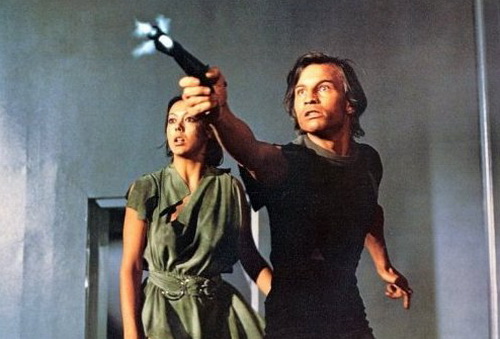
See Logan Run. Run, Logan, Run.

Just re-seen: Logan's Run (1976), a lovely HD transfer. I may not have seen this film since it was in theaters-- Star Wars came out the next year, ya see, and well, it just seemed so irrelevant...

It was a big-budget sci-fi film from MGM, at the time on it's last legs as an independent studio. It posits a post-apocalyptic society where the survivors live in a vast domed city. For reasons that really, really aren't made 100 percent clear, everybody is given nifty little crystals in their hands which mark the days until they turn 30. When they do, their crystals start blinking and they must to submit to “carousel,” where they fly in circles in an amphitheater until they “renew” (i.e explode). Those who choose to opt out of this program are called “runners,” and are chased down the the black-clad Sandmen.

The main plot concerns Sandman Logan 5 (the very pleasant Michael York) who is bamboozled by the computer that runs everything to go and find "Sanctuary," a sort of underground railroad for runners. With friend Jessica 6 (Jenny Agutter) in tow, they manage to escape the dome and discover the world outside the dome is pretty, but full of lizards and ruins and an Old Man (Peter Ustinov) who has a thing for T. S. Eliot cat quotes.

There are no profound insights to be gleaned from a mature evaluation of this film-- like, for instance, seeing The Incredible Mr. Limpet again and discovering it's a sub rosa tribute to singlehood. But it's still a curious little sci-fi franchise (and it IS a franchise: it spawned a short-lived TV series with Gregory Harrison and Donald Moffat):

Daniel's remake formula gets a workout in this film. To drive this point home I'm gonna •••spoil••• the ending (I don't feel too bad spoiling a 36-year-old film). Logan's Run was a sci-fi film made in the pre-franchise era, when sci-fi films had amazing endings. Soylent Green is made of people. You blew it up, you maniacs. Star Wars had an ending so iconic and exciting people are still trying to imitate it. But Logan's Run had a lousy ending: Logan is recaptured, jammed in a mind-reading chair, and apparently the illogic of him not finding Sanctuary, the existence of which the master computer only suspected in the first place, causes said computer to “renew” (i.e. explode) so hard it cracks open all the domes, letting everyone out. Huh?

This Deus Ex Machina was one of many divergences from the 1968 novel the film was based on. But really, honestly: the ending of the novel (which I read before I saw the movie, a first for young me) is even hokier. “Sanctuary” in the novel is a space station “near Mars;” so in the last pages Logan and Jessica just rocket away from the whole magilla. Again: huh?

• Every film reflects the time it was made in, and Logan's Run reflects it like a gigantic mirror ball. The premise at the core of the novel is based in the late-60s youth movement-- "Never trust anyone over 30" taken to it's logical extreme. The 1976 version tops this premise with a layer with Me Generation hedonism: It's a society of casual sex literally enveloped in a fog of drugs, and there's no such thing as marriage and parenting. As far as I could see, living under the dome swings like a singles-only condo. Caftans, disco-fabric dresses and hideous chrome furniture abound: Add Boone's Farm and diagonal wood paneling and it wouldn't be sci-fi anymore.

• I was amazed by all the nudity. The principals get naked at least three times-- and not sensual, darkly-lit love scenes, but right under the key lights, more like “we'd better take off these wet clothes before we freeze.” Several of the places Logan and Jessica “run” through feature wall-to-wall tits. This film had an MPAA rating of PG. Man, have ratings changed since '76.

• For Farrah Fawcett (Farrah Fawcett-Majors at the time), Logan's Run was her breakout movie, even though her part as Holly 13, a receptionist, was quite small. Still, the attention she got from it landed her a starring role in “Charlie's Angels” a few months after this film came out, and the rest is history. And strangely, it's not for any sort of amazing performance: she was simply so arrestingly beautiful at the time, such a personification of 1970s “it,” that the plot would grind to a complete halt when she was on-screen. Much was said at her passing in 2009 of her unreal looks: Her mother described how, when Farrah was a teen in Corpus Christi, total strangers would peer into their house to catch a glimpse of her. Then again, I may still be under the spell of her poster: to quote Ms. Fawcett herself, “God gave women intuition and femininity. Used properly, the combination easily jumbles the brain of any man I've ever met.” Me too, Farrah.

• And, in what must seem a quite repetitive theme by now, Logan's Run is being remade, slated for a 2014 release. It is supposed to feature Ryan Gosling and Rose Byrne, and it hasn't actually entered production yet. Don't bet the farm on a green light, though: Ryan Gosling is riding high from the acclaim from his role in Drive, and a sci-fi film with a remarkably similar premise just came out a few months ago (In Time). But if it does, that gives Hollywood a second chance to fix that lousy ending.

Tuesday, November 1, 2011

The 2011 Austin Film Festival Day-to-Day

Thursday October 20th - Flew in non-stop from San Jose, got a lift to David Miller's house from David himself.

The last time I was here in 2009, when John and I were finalists, I spent all my time in the AFF bubble, the four-block area centered on the Driskill and Stephen F. Austin hotels in the heart of downtown. This time I was lodging in South Austin, 6 miles from the action, and I had a car to use (and, unfortunately, pay to park). This situation, and the fact I had nothing in competition this year, gave me a somewhat more realistic take on things.

Didn't do much more that day than get my laminates and meet up with some nice folks for some drinks at the Driskill Bar, seated right next to where Joh, our wives and I celebrated our win two years ago. Left, had Tex-Mex with David and got too hammered make the first AFF late-night party.

Friday October 20th - Made several panels. One, called "A Shot of Inspiration" with Shane (Lethal Weapon) Black and Jim (Fight Club) Uhls, was quite excellent and inspirational as advertised. Another, with some dev girl from Pixar, bombed out and went to questions after only 15 minutes. After excellent BBQ at the French Legation, waited in an immense line for the AFF screening of The Rum Diary.

Bruce Robinson (L) and Johnny Depp (R)
The film itself was fairly good, though there was something definitely wrong with it. Protagonist problems, perhaps. In the Q&A afterwards Johnny Depp is nothing short of charming and clever, but writer-director Bruce Robinson (Withnail and I) was reeling, sloppy, incoherently drunk. (All part of his bio, apparently). This threw off moderator Elvis Mitchell, who was snippy throughout the session. It didn't help that pinwheel-eyed Depp fans were asking questions like "I'm making a short film and I'm wondering, Johnny Depp, if you'd want to play God?" His response: "That sounds great, but… the research…" This debacle was the talk of the AFF for the rest of the weekend.

Attended a late-night party at Ruth's Chris Steak House. This was just as it was last year: A bunch of writers jammed into a room with free Dos Equis and 100dB conversational levels. Met a slick-haired fellow from Florida who made a film about an 18-year-old virgin stripper and, minutes later, a big-eyed young lady from Michigan who had a rather touching family story as a short in competition. Both these folks shot their films on Red One cameras in 2.35:1. See? Anybody can do it these days. Chatted up Lawrence Kasdan and met Thomas Jane.

Saturday, October 21st - My favorite moment came early in the morning at the Silver Valley Donut Shop on William Cannon Drive. The place was full of locals, Good Ol' Boys. As one fellow made for the door, his friend said "Have a good'un, Earl. Stay out of trouble."

Without breaking stride, Earl replied, "You can't tell me what to do! I might be fixin' to start something."

Typical Panel, Driskill Hotel Ballrooom
More panels at the AFF. John Lassiter gave a good talk about the Pixar writing process, which is diametrically opposed to the standard Hollywood process, where most producers are lawyers or agents-- which makes them spectacularly unqualified to give notes on writing, but do anyway. Takeaway quote: "Imagine taking a 747 from here to Tokyo-- and the pilot is a lawyer who 'always wanted to fly a plane.'"

Another Panel featured Rodrigo García, the son of Gabriel García Márquez. His talk was supposed to be about constructing complex characters but ended up being mostly about himself-- excluding the part about how his being a famous person's kid got him into the business in the first place.

After some fine BBQ at Stubb's with John and his Seattle posse, crashed for a few, then came back downtown that night for the Pitch Fest at the Speakeasy and late night party #2. This one was not quite as loud. Went back to South Austin and collapsed on the couch. David came back from a gig in San Saba at 2:30 a.m. and we stayed up 'til 5 talking old trucks (he has a '55 Panel, I have a '56 Panel) and finishing a bottle of Jack's.

Sunday October 22nd - Slept right through the "Hair of the Dog Brunch," the final party of the AFF weekend. After grabbing some migas at Casa Garcia (yum!) I made the afternoon panel-- "Endings: Good, Bad and Insanely Great," given by Michael Arndt. This guy wrote Little Miss Sunshine in 3 days, revised it 100+ times, and it won the Best Original Screenplay Oscar in 2006, a first for a first-time scripter. He also wrote Toy Story 3, which was nominated for Best Adapted Screenplay in 2010. Arndt obviously had had a lot to teach us-- and he did. By far, the best panel of the entire weekend, almost worth the steep cost of the badge.

Driving around rural Texas in a pickup
truck in the middle of the night.
After tearing up some Texas freeways in David's 1995 Chevy pickup afterwards (so I can cross 'drive a pickup in Texas' off my list of things to do) got a ride to the airport from the finest steel guitar player in all of Austin.

Overall, and excellent weekend in the finest city in Texas. Three summary observations on The 2011 Austin Film Festival:

1. It's definitely a bubble. in the Badge Zone of the AFF, you get to meet, chat up and even pitch ideas to people high up in the industry. Just remember that when you're back in the real world, you'll never get within 2 miles of these people.

2. Much easier to see said bubble when you spend a lot of time outside it. Got to visit the Broken Spoke Honky Tonk, Barton Creek Mall (for souvenirs), The Alamo Drafthouse South and got drive-thru at R. Terry's on Lamar. Out there, where the real Texas is.

3. As fun as the 2011 AFF was, it does not beat being there with a script in competition. Doesn't even come close. Still, here and there throughout the long weekend people remembered me for our 2009 win. And that felt pretty darn good. Who knows? I might be fixin' to start something.