Showing posts with label movie. Show all posts

Tuesday, April 21, 2020

Nobody Knows Anything, For Real This Time

William Goldman’s famous Hollywood aphorism “Nobody Knows Anything” has never applied with as much profound depth it does now.

Hollywood as a collective definition is composed of several large interlocking systems, all designed to create, produce and distribute entertainment content. Most are being crushed by the coronavirus lockdown. Going through the process beginning to end:


• Pre-production is still going strong. TV writer’s rooms are staffed via video conference, and scripts are still being optioned. Projects are still being greenlit, and everyone is positioning for the days that will follow COVID-19.


• Productions are dark. Thousands of film and TV show production companies are shut down, crews on furlough, sound stages empty, equipment unrented. Film and TV Production are collective endeavors, ones that require a lot of close contact (for example: during shooting, an average cinema camera rig has three sets of hands on it) so it won’t be safe for a long time. News and some forms of reality TV have the edge here: “American Idol” is experimenting with a remote contestant format, which is better than nothing.


• Live theater is utterly dark. Hamilton is playing at precisely zero venues worldwide.


• Streaming services and cable are doing incredible business right now. Industry leaders are worried about the medium-term health of this sector: If the astounding level of unemployment continues, subscriptions to streaming services and full-service cable will start to dwindle as people find them increasingly unaffordable.

• The big hit to Hollywood: Film Exhibition. Movie theaters are closed, and the prospects of movie-going returning to prior levels any time soon is increasingly uncertain. In fact the very survival of movie theaters is in doubt: AMC may be looking at bankruptcy protection (something they do once a decade or so, but still).

Movie-going has been derided constantly in the age of streaming as a dinosaur, a relic of the pre-television industry. This is what most of this post is going to concentrate on, because I do not think people really grasp how absolutely vital the movie theater ecosystem is, and how losing them will profoundly affect almost every other aspect of the entertainment industry.

Studios operate on a “tentpole” model: big, well-publicized films released to thousands of theaters worldwide and provide revenue through box office sales for other productions. To turn a profit for these films, which are generally budgeted over $100 million, huge theater capacity is required, hundreds of thousands of butts in seats. Marvel, the newest large studio, operated on the tentpole model 100%. Others operate downmarket, packaging independent films made on modest budgets.

But all this machinery has stopped.

I’m offering two prognostications for the future of the motion picture exhibition industry, both on the extremes.


FULL RECOVERY SCENARIO


A seating diagram programmed to create a safe space around each sold seat.
A mix of singles, 2s, 3s and 4s shown. Nobody is placed in the middle of a row
so they do not have to pass close to anybody else. Capacity is reduced 75% to 80%.

When the states start slowly opening up theaters again, social distancing guidelines can be put into effect to assure patrons who are going to be VERY VERY NERVOUS about going into a darkened windowless room full of strangers.

The way I came up with (which no doubt the theater chains are implementing) is centered around the fact that most theaters are based on reserved-seat ticket sales. When a block of seats is purchased, the seats around them are condemned for the screening to maintain a 6-foot defensive space. If strict contact rules are allowed— two parties per row to eliminate close passing for the aisle, which is always ass-to-face— theaters can be filled about 25% of capacity. This does not allow for full sellouts, but it is at least equal to a modest weekday crowd.


During these first few weeks or months people will likely be treated to low-budget fare. Independent films, genre comedies, horror films: films with modest budget and the possibility of getting a return even in lower-capacity venues. Studios can and will reserve their large-budget tentpole films until they can get enough screening capacity to make releasing them a worthwhile risk. (a lot of big-budget films are frozen in post-production as well: visual effects houses are not operating, and a film the scope of something like Avengers: Endgame can’t be finished off on somebody’s iMac at home.)

Once the curve is safely flattened theaters can go back to full capacity, though it remains to be seen if people will feel confident enough to pack themselves into sellouts for quite a while. Some late-summer big-budget releases— the sequel to Wonder Woman being an example— are sticking to their release dates, betting the huge audiences are just waiting for the all-clear.


Bravely sticking to a mid-August
release date. Notice it's already
been moved down from June.
COLLAPSE SCENARIO


Major chains, empty but still paying huge rents for their their multiplexes, go out of business. Theaters that survive see persistent poor box-office as people, still spooked by COVID-19, stay away.


Without a way to recoup investment for big-budget films, the studios release them streaming at a loss. Streaming and on-demand represent a revenue source, but compared to theatrical release box office it’s tiny, ancillary, in the old days a way to slightly round up the numbers.

If the financial downturn continues and people cancel subscriptions, even this outlet will become even more problematic. Without a path to profit studios will eventually stop green-lighting big-budget films entirely. For movie geeks who hate comic-book movies this sounds heavenly, but remember that big films finance small films. The Lord of the Rings trilogy financed a decade’s worth of modest-budget New Line films.


Without theaters, the theatrical distribution system will collapse. This will create chaos: non-chain theaters that managed to stay open will have nothing to screen. Drive-in theaters, the only healthy subsection of the exhibition industry, will collapse as well when they run out of films to screen.


This bleak scenario ends on your TV: Streaming, on-demand and TV will be the only outlet for scripted entertainment. The big franchises will likely be broken up into series and miniseries. Cable and premium, already increasingly turning to series to attract viewers, will start to shrink: many of the add-on premium channels show endless theatrical films, and with that source of content gone add-ons like Starz Action and Showtime Comedy will start vanishing.


The other problem is the eternal conflict: Hollywood versus The Internet. If the theater industry collapses, the Internet wins— and never forget the old hacker battle cry: “The Internet wants to be free.” People naturally EXPECT films to be cheap or even free when they’re on TV. Additionally, any film put out on streaming is available for torrent download within hours. In my job as a post-production profession I’ve always advised indie filmmakers to only put your films on streaming platforms when all other revenue streams— festivals, optical media— have been exhausted. Once it’s online, you’re done making money off it.

 But with all the eggs in the TV screen basket we’re back to the ability of people to pay for these services. If hard times persist, many of them will end up cancelling, which will drive revenue even lower.

Well, those are the extremes. I think the reality will be somewhere in-between: some chains will close, some big-budget films will be canceled, and it’s going to be tough to make a living in Hollywood for a while.

But really: nobody knows anything.

Thursday, January 30, 2020

2019 Best Picture Nominees: Place Your Bets

For the first time in a long time, I actually saw all nine of the Best Picture nominees this year. Here’s what I found notable about them, and a stab at prognostication

FORD V FERRARI
– It’s been called a “Dad Movie” and it is: A Boomer story about the one thing Boomers really care about: cars. In this film you can see the humble origins of all the obnoxious high-performance supercars currently being driven around by midlife-crisis millionaires and decadent oil-money royal nephews: Ferrari, Shelby, McLaren, etc. Feels like a fill-in nominee, but Christian Bale has a slim chance to score a win.

THE IRISHMAN – A Netflix offering from Martin Scorsese. I’d argue that, like JOKER, it's an imitation of a Scorsese core cinematic offering, despite the fact he directed it. Really more of a Robert De Niro film: he was instrumental in packaging the deal and bugging Joe Pesci 20+ times until he came out of retirement to participate. It’s overly long, which has a lot to do with the production oversight methods of Netflix (more below) then actually having three hours of story to tell. Look at a few acting nods, but not a Best.

JOJO RABBIT – This is the one film that I consistently forget is in the running. Not that it’s forgettable: it’s such a singular, unique film that it doesn’t fit into the mental framework of Oscar movies. It’s a comedy / drama about 10-year-old Hitler Youth member during the last months of World War II. His imaginary friend is Adolph Hitler, and his core beliefs are challenged when he discovers a Jewish girl hiding in the attic of his house. So it’s a strange setting for a comedy, but a very worthy film-- one that I’m afraid will get passed over because stories like this make some people queasy.

JOKER – Perhaps the first superhero movie (or rather a supervillain movie) from either major imprint to get a Best Picture nod. It may well take the big prize: JOKER has a polished look with solid art direction. It’s also a nihilistic story that is centered on explaining away the creation of a murderer as a product of hard times. It does not quite justify him, though, which is where Joaquin Phoenix’s remarkable performance comes in, pushing against the amoral narrative. It may well take the big prize.

LITTLE WOMEN – This is a fine film, filled with great performances and meticulous art direction (it will get Best Costume because, as we all know by now, Best Costume always goes to the movie where actors wear clothes that look like costumes). The story was given the Tarantino script-blender treatment, transformed from a time-linear narrative to a flashback / flash forward style that breathes a considerable amount of surprise and energy into the familiar tale. Great Gerwig did not get a Best Director nod, which usually means it won’t take the big prize.

ONCE UPON A TIME… IN HOLLYWOOD – QT really mended some fences with me with this film, which luxuriated in the sunny universe of Hollywood in 1969. It will appeal to Academy voters ‘cos it is a very flattering look at their own industry, giving it the standard glossy take as a creative, glamorous place where dreams come true. However the gory, historically inaccurate, needless ending will sink this film.

MARRIAGE STORY – Another Netflix joint. The performances by Scarlett Johansen and Adam Driver are electric, riveting and devastating. I get the feeling one or both will be rewarded. The film itself was… fairly good? It felt like a TV movie, and it suffered from the same problem most Netflix features have: it’s sloppy, underbaked, feeling a lot more like a first edit than a final cut. This has a lot to do with how these films are financed: Netflix is not trying to sell movie tickets. These films are made to generate buzz for a streaming service, which is trying to increase subscriptions. Absent the need to compete one-on-one, Netflix does not insist on one more script polish, one more effects pass, one more edit. Look at the downstream offerings on Netflix and you can really see this oversight philosophy in action.

PARASITE – This is, hands down, the best film of 2019. Enormous creative energy in the direction, photography and design, the acting is superb, and the story is both timely and utterly unique. It tells the story of a poor family which figures out a way of gaining the employment of a rich family through deception and clever thinking. Unfortunately it a Korean film in Korean: there are a certain percentage of film viewers who simply do not like reading subtitles. I HOPE it gets best picture, so I’ll just make it my personal pick.

1917 – a visually and technically superior gimmick film that is staged as one long continuous take. It tells the story of two young soldiers on a perilous mission to deliver a message behind enemy lines. The problem with gimmick movies is the gimmick overwhelms everything else, like story or acting performances. So even though it is a visual spectacle, 1917 is an emotionally static affair. I spent most of my time looking for the parts where they hid the cuts— when a tree is in the foreground or when the scene enters darkness. This film already took some significant pre-Oscar industry awards, and Hollywood may well reward it: they do love their bright, shiny objects.

In a few weeks, we’ll see how I did!

Friday, August 9, 2019

Tarantino the Nostalgic Unreliable Narrator

I went into Once Upon a Time in Hollywood expecting not to like it that much: he burned me very badly with his cute switcheroo act with The Hateful Eight, a film he touted as an epic widescreen roadshow movie but turned out to be a blood-drenched, claustrophobic indie film that had no earthly reason to be in Ultra Panavision 70.

But after thinking about it for a while afterward, I have a grudging respect for this film. Once Upon a Time is built around an original story, unusual for him: its not a pastiche or an homage or a dully executed re-make of some cheap exploitation film. It’s really him, talking directly to us and not through some faux-junk, schlocky exploitation genre— and God damn it if that isn’t refreshing. Quentin succeeds at his primary goal here: creating an alternate universe version of Los Angeles in 1969. He did a splendid job of it. The dialog is crisp, mostly lacking the big gobs of “Tarantino-speak” that bogged down earlier efforts, and the acting snaps as well. It’s a longish film, and his obsession with the trappings of the past often overwhelms his story, but more worth your time than any of his films since Jackie Brown.

On to the notes!

Nostalgia: Once Upon a Time drowns in nostalgia, aching and wistful and angry at the passage of time that erased the treasures lovingly displayed onscreen. Quentin Tarantino is a filmmaker driven by desires— obscure action cinema, violence, glib dialogue, women’s bare feet. But this time his desire is the past. His past, a past he has said was the favorite time of his childhood.

Once Upon a Time is Quentin the video-store clerk and kid who grew up in LA in the 1960s and 1970s, finally brought to his fullest. It’s a wishlist of everything he ever wanted to do in a movie as a kid, pattered out in his characteristic staccato: he wants to be a TV western star (Quentin Tarantino was named after Burt Reynold’s character in “Gunsmoke”). He wants to beat up Bruce Lee. He wants to change Hollywood history (more later). He wants to set an LP needle down right on the gap before his favorite song (this happens several times) and hear the KHJ and KFWB jingles ring out over an AM car radio again. He wants to make a movie with Steve McQueen and Michelle Phillips and Sharon Tate. He wants all he knew and saw and loved as a child returned to him.*

But most of all, he wants to go home to the past. You can feel it: his longing reaches right out of the frame. It’s all there in broad strokes: late 60s Hollywood Boulevard lovingly recreated; classic, unchanged locales like Musso and Frank and El Coyote visited. There’s a montage near the end of the film that gave one of the biggest thrills of the movie: night falls and long-gone business facades light up. There’s an old Der Weinerschnitzel, a Mission-style Taco Bell, The Cinerama Dome restored to its Pacific Theaters glory.

Tarantino is one year younger than I am, and I spent some time in LA around this time as well— down in sleepy suburban Lynwood rather than Hollywood, but I know these sights, the look and feel of the era. I’ll admit one of the strongest reactions I had to Once Upon a Time in Hollywood was a strong desire to move into this film. I didn’t want to leave. I’m not sure if 1969 was a better world than 2017, but the version he showed us was simpler, shinier, and undeniably beautiful.

Two-person, one-character protagonist: washed-up star Rick Dalton (Leonardo DiCaprio) and his stunt-double/dogsbody Cliff Booth (Brad Pitt) are the inseparable pair at the center of the film. They make a very big deal out of the fact that Rick can’t function without Cliff, and vice versa. This makes it easy to pin this relationship as a Tarantino staple, tough guy male bonding. But it goes far deeper than that. Rick and Cliff are the same character. They cannot exist outside of the definition they have for each other. The two characters span one complete male personality. Rick is insecure, weak, vain and sensitive (he cries like three times in the film), but also talented and ambitious. Cliff is taciturn, strong, highly capable and practical, but also lacks ambition to the point he is content to live in a wreck of a trailer in North Hollywood. A lesser effort would have these traits embodied in one overly complex, somewhat unbelievable character: in Once Upon a Time this one character is smeared over two individuals, yin and yang, completing each other in all ways, functioning as one complete person. This sort of split character has been done in other films, but usually the other way: in biopics they make they take handfuls of real historical figures and smoosh them into one character.

History and the Unreliable Narrator (mild spoilers): Once Upon a time in Hollywood follows three intertwining storylines, much like Pulp Fiction but without time-shifting tricks: Rick and his buddy Cliff, trying to re-start a failed Hollywood career; Sharon Tate’s arrival in Hollywood, and— lurking like an evil portent— the Manson Family, biding their time in an abandoned movie ranch in Chatsworth, waiting for their call to the stage.

Anybody familiar with recent history knows what happened the night of August 8, 1969: Four members of the Manson Family entered the house on 10050 Cielo Drive in the LA hills and murdered everyone inside, including actor Sharon Tate. Not to give away anything specific, but this is not what happens at the end of Once Upon a Time. Something completely made-up happens.

Quentin Tarantino has done this sort of “alternative historical fiction” thing before: he killed the living hell out of Hitler in a French movie theater in Inglourious Basterds. And by all means he has every right to do so: he’s the storyteller here and he has a right to re-tell historical events any way he wants to. When you get right down to it, every filmmaker who ever shot a narrative film is a total and complete liar. You can plot a line straight through the relative level of reality in any filmmaker’s work, from hyper-real (Zero Dark Thirty, The Grapes of Wrath, HBO’s Chernobyl) to utter fantasy (Toy Story 4, Lord of the Rings, Top Gun) with lots of shading in-between. And the hyper-real ones are still mostly made-up hooey.

But the tall tale Tarantino is spinning at the conclusion of Once Upon a Time does something very strange. If the terrible thing that is supposed to happen on the night of August 8, 1969 doesn’t happen, what was the point of two-thirds of the film? In other words, if you showed this film to somebody with NO IDEA of the history Quentin Tarantino is re-writing, what would she make of it? She would sit through long sequences of Sharon Tate wandering around Los Angeles, shopping, seeing herself in a movie theater in Westwood. She would see long sequences of Manson Girls wandering around Los Angeles barefoot, hitchhiking and hanging around Spahn ranch. But they never really connect: all the long minutes of foreboding and build-up are dissipated in a standard Tarantino gory ending. Our historically ignorant movie viewer would leave the screening wondering why those other sequences even exist.

Does a filmmaker owe fidelity to historical facts? I don’t know. What I do know is this film will be seen by people 50, maybe 100 years from now. The Tate-LaBianca murders will no longer be a part of living history: to these future viewers, they’ll be as familiar with the actual events as we are of the details of the murder of Stanford White in 1906. Which is to say they may very well accept Once Upon a Time in Hollywood’s ending as actual history. This is how history gets distorted: it does not seem important now, but we owe some debt to the future to tell the truth.

*Quentin Tarantino put himself in this film twice, even though he had no cameo. In one segment Rick Dalton is resting between set-ups in a western backlot set next to a precocious child actor (Julia Butters). She is roughly the same age QT would have been in 1969, and you can hear him talking through her as she engages Rick in some positive affirmation. Later in the film one of the characters announces a move to “a condo in Toluca Lake,” likely the same one occupied by Jimmie and Bonnie 25 years later in Pulp Fiction (1994).

Saturday, March 23, 2019

That's "Us," all right: The Hometown Perspective

Jordan Peele's Us is in some ways an expanded version of his earlier film Get Out: it deals in the same paranoid themes of identity and replacement as his first film. The new one transcends the limitations of the first, and it’s concentration on racial messages, to explore some strange new ideas. A lot of them.

The Wilsons, a family of four headed by Gabe (Winston Duke) and Adelaide (Lupita Nyong’o) set out for a vacation in the Santa Cruz area. Adelaide was there when she was a child, back in 1986: something traumatic happened to her back then that fills her with quiet unease. Then, one night in their comfortable lake house, a family of four shows up at their driveway— nearly identical copies of them, clad in red jumpsuits, holding golden scissors. They proceed to brutalize the Wilsons, fully intent on eventually killing them, likely to replace them. Not sure how that would work: these doubles are all mute-- except for Red, Adelaide’s doppelgänger, who talks in a raspy, wounded voice, who explains that they are mirror images of the Wilsons, waiting underground their entire lives for their chance to come up into our world. Things quickly become violent, and that violence soon spreads to their neighbors' lake house, and continues to build.

Hi. We're not the neighbors. We're you.
Jordan Peele explores some expansive ideas in this film: it has a symbolic language that plays out stronger than the horror elements. Class (there is a very literal underclass in this universe), identity and the conditional nature of morality are strong themes. These explorations give the film a more speculative, “Twilight Zone” feel than establishing a horror film tone. Nonetheless, there are homages to the “Strangers” and “Purge” franchise, and a good-sized dose of Nihilist Austrian Horror as well. Most of all, it’s a variation of “Invasion of the Body Snatchers,” the ultimate body-horror franchise.

This is a scene from a sequence at the beginning of Us, which
takes place in a "dark ride" at the Boardwalk. It's a labyrinth
made to look like a forest, lit in dark pale blue light, with
recorded narration saying odd things over ambient forest
sounds. It did not remind me of a haunted house ride:
it looked like an exhibit at the Museum of Jurassic
Technology in Venice.
For all the gore and suspense, its also clear that this is Peele’s sophomore effort: he throws in so many ideas and symbols that these explorations tend to overwhelm the horror elements, making it an engaging film, but less of an emotional experience as the tidy, horrific Get Out. The photography is outstanding, telling half the story through repeated images and motions, reflections and wide-open ‘scope compositions. The performances are very good as well, with Lupita Nyong’o in particular turning in performance you would swear was done by two entirely different people.

That’s all well and good, but what about the local angle?

Jordan Peele and the Giant Dipper.
Our hometown of Santa Cruz (Daniel the Box Office Report guy and I both hail from there) has been in some popular films— but it rarely gets a star turn under it’s own name. It does in Us--and a very satisfying star turn at that. In the 1980s at least, the super-duper-left-leaning city council found objections to the themes of most films that wanted to shoot there, and insisted the city’s name be stricken from the scripts. Which is why The Lost Boys is set in “Santa Paula” and Sudden Impact is set in “Santa Carla:” Creator and Killer Klowns from Outer Space aren’t really set anywhere.

The Santa Cruz Beach Boardwalk is a central setting in Us (as it is in most films set in the area) and I’ll admit this new film gets something right about the place earlier films missed: it’s kinda creepy. This amusement park been around for over a century, and the places where Us was filmed are on the east end of the boardwalk, which hasn’t changed much in 40 years. The opening flashback is set in 1986: having actually been there multiple times in 1986, I can say the film gets it right, and the place is unchanged. (The only difference is there used to be very good video arcade on that end, which is not evident in the flashbacks.) The Seaside Company keeps throwing paint on the place every season, but anyone who has grown up there knows the Boardwalk is an ancient place, full of history. To walk there on a summer evening is to feel the closeness of a long past: the smell of creosote, gear oil, suntan lotion and cotton candy: the crashing surf and the screams from the roller coaster riders. As kids we all shared Boardwalk myths, whispered to each other, invariably horrific: the girl who fell from the Sky Glider. The sailor who was decapitated at the top of the Giant Dipper. Us captures this mood: timeless dread barely covered up under new paint.

This is something you can see
any day of the week in Santa Cruz.
One of the first shocks in Us is in the 1986 flashback, when young Adelaide wanders away from her parents at the Boardwalk. She walks by a scary-looking homeless person holding a sign with a bible verse on it (Jeremiah 11:11, one terrifying verse!). People in the audience had a visceral reaction to this guy. Having grown up in Santa Cruz, however, all I could do was shrug: In my old hometown, he’s way too common to be scary.


All good horror stories start at home, right?

Wednesday, May 24, 2017

Alien: Covenant as a Weyland-Yutani Investment Prospectus

The corporate logo as it appears in the era of
Alien: Covenant, showing the influence of
Ancient Egyptian mythology.
Every Alien movie is another chapter in the long history of the Weyland-Yutani Corporation, a powerful British-Japanese conglomerate specializing in advanced technology, mostly space exploration, extraterrestrial colonization and robotics. In terms of sheer size and scope of operations, W-YC is a formidable, well-funded corporate entity.

The corporate logo as it as it appears later in the Alien
fictional universe, around the time of Aliens.
But with the evidence of all the Alien movies— the four main sequence films, the AVP prequels and the two newer prequels— one would come to the inevitable conclusion that Weyland-Yutani is not that successful at basic core competency. Colonization Division has a number of outstanding failures (Aliens, Covenant). The loss of large, expensive spacecraft (The Nostromo, Auriga and Prometheus) is constant and horrendous. And Robotics Division’s track record of creating helpful, useful, trustworthy cyborgs is not stellar. For every helpful synthetic (Call from Resurrection and Bishop from Aliens) there is a deceitful, untrustworthy model (Ash from Alien and, as it turns out, David from Covenant).

So I need advise all that Weyland-Yutani may not be a good long-term investment.

On to Alien: Covenant, the second Ridley Scott prequel. this latest prequel franchise installment-- occurring after the events of Prometheus but before Alien-- involves the crew of the colony ship Covenant being awoken by an interstellar storm and, during repairs, they catch a faint signal from a nearby planet. Bound by Weyland-Yutani’s rules about such things, they change course and investigate the signal. Yes, this exact same thing happened in Alien, but this world is much prettier, with big redwood trees and shimmering lakes. However, again like the first film that big horse-shoe Alien vessel is there, and the well-armed but non-space-suited crew of the Covenant are in for an unpleasant surprise…

Danny McBride's character is called "Tennessee."
Gee, I wonder why.
As far as the story goes, Covenant hits nearly identical notes as the first Alien film: the crew is picked off one by one by various manifestations of the Alien life-form, sometimes in pairs. The cast is great: Katherine Waterston (Shasta from Inherent Vice) is the Ripley analogue, Billy Crudup is the feckless, fundamentalist captain, and Danny McBride probably turns in the best, least self-aware performance of his career so far. Michael Fassbender is sublime in a dual role as David, the cyborg from Prometheus, and Walter, a slightly updated model.

The thing Ridley Scott is interested in— aside from fascination over David and Walter— is explaining the origin of the Alien life-form. It is indeed compelling, the effort that goes into outlining and detailing this drawn-out exegesis. it's like watching a steel rail being heated and bent into a circle: a lot of effort, serves no real purpose, but it is still interesting to watch the process.

Covenant puts out a strong Aliens vibe in places.
The Alien life-form does not need a backstory. It is, like Ash called it in the 1979 original, a perfect organism. It is pure aggression, unknowable and mysterious and always deadly. We do not need know how it came to be: it represents the danger of the unknown, the fact that if we reach out into the dark universe and look hard and long enough we will eventually discover something that will kill us.

Nonetheless get a more-or less whole Alien creation story out of Alien: Covenant, which is much more than the plot gives us in terms of interest. Like the movie Alien, we start with a good dozen or so humans who manage to blunder or become enticed to planet where they meet their untimely ends in various violent ways. After a while the film devolves into a pastiche of haunted house/ teen slasher film tropes. The Alien is Mike Meyers, the crew are dumb teenagers who are killed off randomly, and we even have a nice Crystal Lake that they get murdered on. Actually, it’s the saving grace of Alien: Covenant and the original Alien that the grisly body count does not respect gender: men and women are killed off randomly. The ending is depressingly predictable, with a dull twist that will fool nobody: unlike Prometheus, which was weird enough to be mysterious, Covenant is too conventional to be all that surprising.

Like I said, it might be time to liquidate those Weyland-Yutani stocks. Yoyodyne Propulsion Systems, however, is still a blue-chip stock— or it would be if they ever went public.

Sunday, December 25, 2016

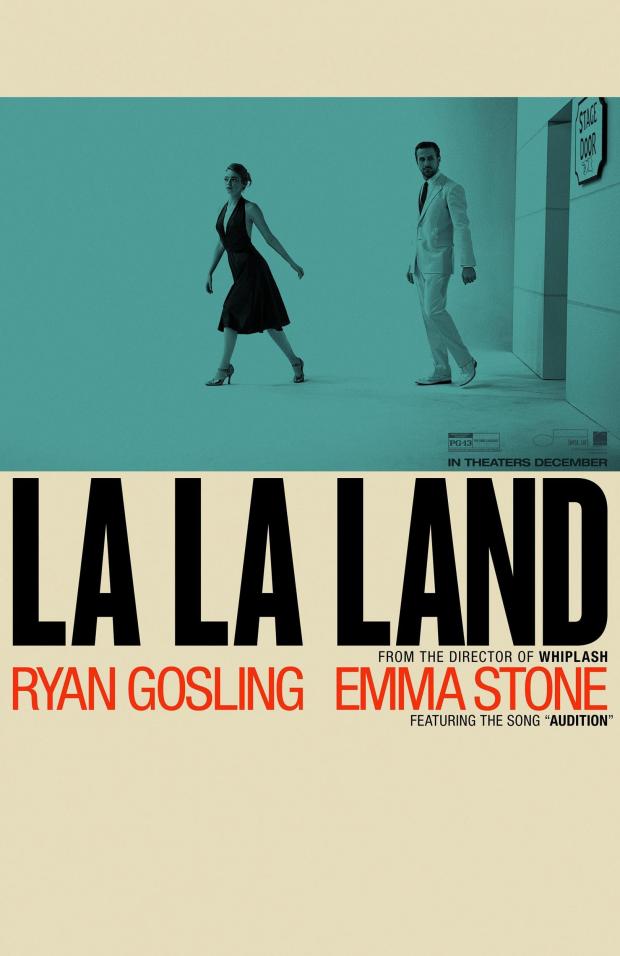
La La Land Successfully Updates A Genre

La La Land is a rare bird, a genre musical film— refreshing and uplifting, sincere and happy and melancholy, a much-needed anodyne for the darkness and cynicism of late cinema. It tells the story of the meeting of two young people, Sebastian (Ryan Gosling) the musician and Mia (Emma Stone) the struggling actress. Both are working marginal jobs, waiting for their moment to break into the careers they dream of. When they meet (after a few hilarious missteps) love begins to bloom— and in true musical manner, their emotions soar in the form of song and dance. This is what is wonderful about musicals: in their universe emotions cannot be contained by prosaic reality. They require the characters spontaneously burst into song. Narrative reality breaks loose and people levitate into a magical space where people dance in the middle of traffic jams and fly into the stars of a planetarium.

But it’s not all just a cinematic heaven of singing and lyrical passages of fancy: the eternal rival of romance and career soon takes over.  Mia and Seb inspire each other to take risks, work hard and strive to make their personal dreams come true. The cost of pushing career first soon becomes the central conflict of La La Land, which leads to one of the most soaring and beautiful and melancholy and moving conclusions I have seen in a modern film.

The third character own this film— the namesake— is it’s wonderful, make-believe Los Angeles: Angel’s Flight, Mulholland Drive, Griffith Park, palm trees and stately SoCal architecture under an endless blue sky or deep blue night. It’s a fun, vibrant place full of artist, actors, strivers and dreamers. It’s been too easy in films of late to see LA as some of late-capitalist hellscape (see Training Day): It’s refreshing to remind all of us that LA is a place where people still go to try to make their dreams come true.

Director Damien Chazelle’s last film was Whiplash, a sort of crazy stalker film set in the world of jazz music about an earnest drummer and his insane instructor (J. K. Simmons, who has a lovely cameo in this film).  Jazz plays heavily and strangely in La La Land as well: Sebastian is a young man obsessed with the world of jazz: he has posters of jazz greats in his apartments, Hoagy Carmichael’s piano stool and longs to open a real jazz club in Los Angeles. There are plenty of kids these days who passionately love alls sorts of dead or marginal forms of music: it never becomes clear of Seb is sincere or just really good at affecting his love of the genre.

"A Lovely Night" on location.
The most remarkable number— a real masterpiece of a shot— is “A Lovely Night,” which occurs near the beginning of the film. After a party in the Hollywood Hills where they accident meet up, Seb is helping Mia look for her car. They break into song and dance at a scenic overlook, the wash of lights in the LA basin below. The scene, which goes from real-world to singing to dance to tap-dance (!) is shot at the real location and very specific time: PAST “Magic Hour,” just after sunset, when the warm glow of the sunset underscores a deepening dark blue sky. The set lighting is low as to illuminate the actors and still leave the sunset and sky bright. This scene not only highlights the considerable singing acting talents of of Ryan Gosling and Emma Stone, it shows off cutting-edge film technology: fine-grained, fast film stock (La La Land was mostly shot on 35mm film), fast anamorphic lenses and the latest light, agile camera packages. Were this a Golden Age musical, this shot would have happened on a soundstage. But instead, it is one long, six-minute shot at a very narrow, specific time of day. This makes it breathtaking on several levels.

Another nice PAST-magic hour shot.
La La Land is in many ways an updated classic movie, a pastiche of the conventions, narratives and styles of Hollywood musicals. It is not a breakthrough in and of itself: this isn’t pure storytelling and cinematic innovation like Mad Max: Fury Road was. It takes the best elements of a great genre, updates the sensibilities to contemporary morĂ©s and makes it all fresh and unexpected again. There’s a little Vincente Minelli here, some Gene Kelley there, a little Jaques Demy, Even a bit of Ross Hunter/ Doris Day and Paul Thomas Anderson.

Another girl in magical old Los Angeles, dreaming
of acting fame. Naomi Watts in Mulholland Dr.
Given all these obvious movie-history references it was then very, very strange that while La La Land played, the place I kept going to for a visual and stylistic reference was… David Lynch. I COULD NOT STOP thinking: “This is a light-hearted musical version of Mulholland Dr. (2001).” It shares a lot of the same qualities as Lynch’s masterpiece: striking cinematography filled with shots of strong primary colors; an abiding love of Los Angeles locations, show business, actors and the mechanics of filmmaking; flights of surrealism; and intimate close-ups, bursting with emotion. These films are on entirely different missions— light, uplifting musical surrealism versus a surreal dive into the darkest parts of the id— but there is a common thread as well, in look and feel.

I may well be mistaken and La La Land may have been released in the
original CinemaScope aspect ratio of 2.55:1. But that's not how I saw it
in Redwood City: they couldn't even manage to mask the screen right.
And, sorry to say, I have to disagree with both the opening title card and Dana Stevens’ review and report that La La Land is NOT in CinemaScope. That specific film format was proprietary for to 20th Century-Fox and Bausch and Lomb, who standardized the elements of anamorphic cinematography. CinemaScope lenses were not much used past 1960: these early models had distortion problems that caused actors’ faces to widen unnaturally: “CinemaScope Mumps,” they called it. Panavision fixed this problem by re-arranging lens elements to minimize distortion. This film is actually in Panavision: they used Series C lenses to shoot it. But this is a quibble: the widescreen compositions are so lovely and the mise-en-scene is so well developed and rich, it’s worth another viewing just to look for visual clues and symmetries.

If you love Hollywood genres old and new, this is a must-see.

Thursday, December 22, 2016

Passengers is Spectacular, Immoral Sci-Fi

Caution: standard, “everyone has already given this away” •••spoilers••• ahead.

Having fallen in love with the Century Mountain View’s reclining cushy seats and large screens after seeing Rogue One there (the theater is a left-over from the domed auditorium days, refitted for pampered Silicon Valley kids) I decided to forgo useful endeavors and see Passengers in 3D.

The first impression is it is a very handsome film, as clean and smooth as a corporate vision of the future... Which this is. The film is set on the Avalon, a colonization ship making a 120-year interstellar voyage the scientifically factual way, without the assist of faster-than-light wishful thinking technology.

The Avalon is a wonder to behold, as interesting to comprehend as the handsome actors who clatter around in it. From the outside it resembles an immense Hobart industrial mixer blade. Inside, it is pure high-end hotel-resort: lovely cabins, swanky restaurants, all the amenities. The sheer amount of open-air space available detracts from the reality of the ship: If the Avalon is on a mission to create profit for it’s owners, they are wasting megatons of energy flying crystal chandeliers and huge swimming pools between stars. Sorry, it’s just a pure Sci-Fi quibble.

The Avalon, in all it's mixer-blade glory. You can see the
massive engine burning fuel from tanks that do not
seem to exist. Sorry, another pure Sci-Fi quibble.
The story begins when the Avalon encounters a field of asteroids deep in interstellar space. Some of them punch through the ship’s deflectors and do damage— which causes one hibernation pod to prematurely awaken its occupant, Jim Preston (Chris Pratt) who soon realizes that he is completely alone on a ship that is still 90 years from its destination. Unable to re-enter stasis, he has a number of unpleasant decisions he can take to relive himself of the prospect of dying alone…

To proceed with this review , I have to write about a •••spoiler•••. But it’s not really a “spoiler,” for two reasons: 1. It occurs at the end of Act I and propels the main narrative in Act II, and 2. many, many other reviewers have also revealed it. Hell, the trailers have revealed it. But it’s important to talk about this because it’s the moral dilemma at the center of both the narrative and the critical framework in which Passengers resides.

In space, no one can hear you flirt. (I wish I had thought
of that line, but it was some other reviewer.)
Jim’s decision is to wake up another passenger, Aurora Lane (Jennifer Lawrence)-- and NOT tell her that he deliberately doomed her to die of old age with him well before the end of the journey. The movie makes it very clear that he is emotionally conflicted with this decision— his decision to not tell her hangs a huge lantern on his guilt. What makes it worse is he decides to wake Aurora, out of 5,000 other hibernating passengers, due to what can only be called her dating profile. She recorded an “all about me” profile before she left and Jim watches it obsessively. Stalker-like. He even hangs out next to her hibernation pod so he can gaze at her frozen body. He has thawed her out believing that she could be his soul mate. Being that there is nobody else on the ship, she eventually comes around and indeed becomes his reductio ad absurdum perfect mate.

Nonetheless, the huge tension in Act II is waiting to see how she is going to find out— and how unbelievably pissed off she is going to be when she does. As audience to this act of kidnapping and deception, for most of Act II I was pissed off for her. What he did is the ultimate violation, a slow murder. Aurora had plans and dreams and places to be: Jim selfishly destroys her entire life because he does not want to be alone. The fact that Jim does this awful thing to a woman makes it worse— and, in fact, it highlights how deeply sexist it is. Imagine if the genders were reversed and Aurora woke up Jim ninety years early and lied about it. The aftermath of the revelation would be short and violent. (This premise pissed off the editors of women-centric website Jezebel so much they spoiled the entire movie, end to end, so nobody has to pay to see it.)

Pissed.
A barely touched aspect of the survivor’s dilemma is one of class. Jim is basically steerage, on a subsidized ticket to a new colony as an essential tradesman indentured to the corporation. Aurora is a travel writer from New York City from obvious wealth, on-board to “experience” interstellar travel and a new colony and write a book about it. So she is Julia Roberts from Eat Pray Love— if Javier Bardem kidnapped her to live with him on a desert island. Part of the fun of the middle of the film is watching Jim enjoy all the gold-level amenities of the ship, things he could never afford on his ticket (even his breakfast choices suck). I can’t help think that if he had thought things through a little better, he could have woken up a steerage passenger to be his soulmate. She would be far appreciative of living the high life on a big empty ship than Aurora, who sort of takes it all for granted as the normal accouterments of her posh life.

The astonishingly immoral center of the narrative takes what looks like a rousing sci-fi movie to disturbing new dimensions. And, strange as it may seem, it makes Passengers a great date film: the discussions after the film is over should really add a lot of new definitions to what a fair relationship is— and how far it can go.

Anyway, on to the movie. That asteroid-caused thing that broke Jim’s hibernation pod is still there and threatens to take down the Avalon, sink it like the Titanic. And this immorally created couple must do what is needed to make that big, utterly predictable Act III conclusion happen.

Passengers kicked around Hollywood for a decade; it was a “Black List” script, which meant it was a hot story everyone wanted to develop, but didn’t. Touches of this brilliance and originality show up here and there as the story unfolds. I recommend it— but know that after seeing it you may well go on an unexpected emotional journey of your own.

Monday, August 8, 2016

Suicide Squad: Why So Serious?

Maybe reviewers saw the subtitle "Worst. Heroes. Ever."
and took it at face value.
After a week of reading many delicious, angry, mean reviews for Suicide Squad, the latest entry into the DC Extended Universe, I did something somewhat contrary to my usual instincts after feasting so well on such a banquet of snark: I went out and saw it.

I left the screening wondering if the film’s many critical detractors and I saw the same movie. I thought it was pretty enjoyable.

Let me clarify.

We’re living deep in the Comic Book Movie Era. Superhero movies rule box offices worldwide. They are now nothing less than a fully formed cinematic genre, with major and minor characters, multi—year story arcs, and very solid and reliable generic characteristics. So, as an new entry into this well-defined genre, Suicide Squad fulfills most of its expectations: it’s filled with action and cross-franchise references and juvenile humor and even more juvenile depictions of adult relationships. It’s PG-13, so they are holding back quite a bit on the gore on this one, but the body count is also near the normal level for this genre.

I kept getting the feeling that critics were slagging on Suicide Squad as a bad film— compared to the totality of Hollywood movies. Maybe that’s true: it isn’t as good as Chariots of Fire or Michael Clayton or L’Avventura or Dodgeball: a True Underdog Story. But as a comic-book movie, it’s truly right in the middle of the pack. If you approach Suicide Squad as an entry in a superhero universe franchise— but if you are NOT a comic book fan or even that familiar with comic books— than the film works perfectly well. We are introduced to a group of new characters via backstory, given the signposts and guides to these new characters inside the universe, and the plot is set into motion. Sure, it was dumbed-down and expository scene’ed to death, but without exposition most audiences would be totally out to sea because this films stars some decidely minor DC characters.*

Harley Quinn (Margot Robbie) in a rare publicity still
with another character.
I agree with most the of reviews that in Suicide Squad there are things that work and things that don’t work. In the minus column, much has been made in the reviews of what a misfire the villain was: The Enchantress (Cara Delevigne). She was, according to some, a cookie-cutter villain whose ultimate goals were poorly defined. Funny, but to me that sounds a lot like MOST comic-book movie villains of late: Thanos (Guardians of the Galaxy) or Apocalypse (X-Men: Apocalypse) or General Zod (Man of Steel) or Ultron (Avengers: Age of Ultron) are not much more than an interchangeable bunch of power-seeking super beings.

The main story— a group of rag-tag villains is banded together to fight an evil superpower— is another misfire, poorly motivated from conception, really. The main characters are so unwilling to be heroic that at one point they all check out of the story and go get a drink in a bar. From a screenwriting perspective, this is hilariously telling. There is an uncanny and spooky effect in the writing process where characters who are stuck in bad plots will try to get out. They will talk to the writer: “This is stupid: I shouldn’t even be here!” There’s a scene in Avengers: Age of Ultron where Hawkeye (Jeremy Renner) hangs a lantern on this effect: “The city is flying and we're fighting an army of robots. And I have a bow and arrow. Nothing makes sense.” But poorly motivated final battles are a hallmark of comic-book movies, so again: I don’t see what all the fuss is about.

What does work in Suicide Squad are the characters you see in every publicity still: Harley Quinn and The Joker. the sheer amount insane energy Margot Robbie and Jared Leto put into their interpretations is evident on-screen, and both are so vivid they make every other character fade into the background— even Deadshot (Will Smith). People have been looking forward to Harley Quinn’s big-screen debut with as much anticipation as Wonder Woman’s— and she does not disappoint. Funny, sexy, wisecracking and fearless— she’s a character who will go into battle with a super-powered villain armed with a baseball bat-- and think nothing of it. Very much looking forward to her inevitable solo movie.

The Joker, breaking the fourth wall to make you pee a little.
Bad teeth and no eyebrows are menacing enough.
Her relationship with The Joker is as weird and creepy as it is in the comics. He is an abuser who both loves Harley and has zero value for her life and well-being. Some have said Leto’s interpretation of The Joker is too creepy and off-putting. Well, not to sound like a fanboy, but: he’s supposed to be creepy. He’s a villain, a murderer. Even at his charismatic best he should still make you pee a little. I’d take Leto over Heath Ledger, who I thought was a bit too fussy and borderline silly. The Joker should make you uncomfortable. And what he has done to Harley Quinn should make you uncomfortable too.

Strangely, what this film reminded me of most was not another DC or even a Marvel movie: It looked and felt a lot like Mystery Men (1999) a high water mark of the heyday of the Dark Horse Cinematic Universe. It has the same colorful design, outlandish, hand-made-looking costumes and grungy detail. it also featured a rather large roster of fairly unknown comic-book characters, juvenile humor and a somewhat limp main story. Much better villain: tho: I’ll take Casanova Frankenstein over The Enchantress any day.

* Both Marvel and DC superhero movies bury easter eggs in the credits. True fans always advise to stick around for these. But the coda at the end of Suicide Squad— no spoiler— I swear is nothing but Viola Davis and Ben Affleck spewing dense comic-book implications at each other for three minutes. I didn’t understand any of it.

Tuesday, June 9, 2015

Zardoz was Exactly 42 Years Ahead Of It's Time

The Big Floating Guy himself.
Perhaps taking my friend Chris’s lead I recently re-watched Zardoz, John Boorman’s very singular science fiction film from 1973. It’s a simple story: In a post-apocalyptic 2293, it’s the story about Zed (Sean Connery), an “exterminator” who manages to escape the wasteland into a “Vortex.” Behind the force fields of the vortex live the “Eternals,” who guard and catalog the remnants of civilization, all under the protection of The Tabernacle, an artificial intelligence. The mere presence of Zed creates conflict and eventually leads to the destruction of their unnatural order.

I know most people with a knowledge of film have some easily portable ideas about this film, sort of meta-positions. Yes, Sean Connery runs around wearing a silly red diaper. Yes, “Zardoz” is a take on “The Wizard of Oz.” Yes, it’s a parable about how nature abhors a vacuum— and will find a way re-establish itself whenever denied. But Zardoz, like Zed himself, is a very clever creation, far more clever than such superficial observations. This film was a breakthrough in several areas— and even has a remarkable solution to a problem that plagues the current state of portable computing.

Burned-out Municipal Centre.
1. Zardoz was the first film to portray what is now a common science-fiction trope: a post-apocalyptic wasteland. The world of this film has been destroyed: civilization has fallen, starving survivors wander blasted hillsides and destroyed cities— preyed on by Exterminators, horsemen chosen by the god Zardoz to check the population of these “Brutals.” The last film to portray people living in an ad-hoc post-apocalyptic society was Alexander Korda’s Things to Come (1940). Sure, the Cold War created plenty of films where the End has Come, but it’s usually a tidy place of empty streets— The World, The Flesh and the Devil (1959), On The Beach (also 1959), Five (1951), etc. In Boorman’s 2293 everything outside the Vortex is wrecked and moldy and haunted by The Brutals: grungy, skinny people wearing threadbare clothes. Boorman’s vision no doubt influenced everything in this genre that came after, from A Boy and His Dog (1975) to Mad Max 2 (1983) right up to The Road (2009) and the Terminator series.

Some Eternals enjoying the garden, unconcerned
about the Brutals on the other side of the shield.
2. The immortal inhabitants of the Vortex, the Eternals, live apart from the dying world behind impenetrable periphery shields. The Eternals took it upon themselves to become the custodians of the past— and in doing so completely detached themselves from Humanity itself. It’s a remarkable criticism of Objectivism— Ayn Rand’s philosophy that great people should be left alone to do great things, and compassion and mercy are really a signs of weakness. Avalow, one of the Eternals, explains to Zed how the Vortex came to be— and perfectly defines it as Galt Gulch:

“We took all that was good and made an oasis here. We few— the rich, the powerful, the clever— cut ourselves off to guard the knowledge and treasures of civilization as the world plunged into a dark age. To do this we had to harden our hearts against suffering outside.”

Boorman exposes this sort of exceptional elitism as nothing more than hubris, unnatural folly that can only fail in the end.

Zed utilizes a Wearable to interface with the Mainframe.
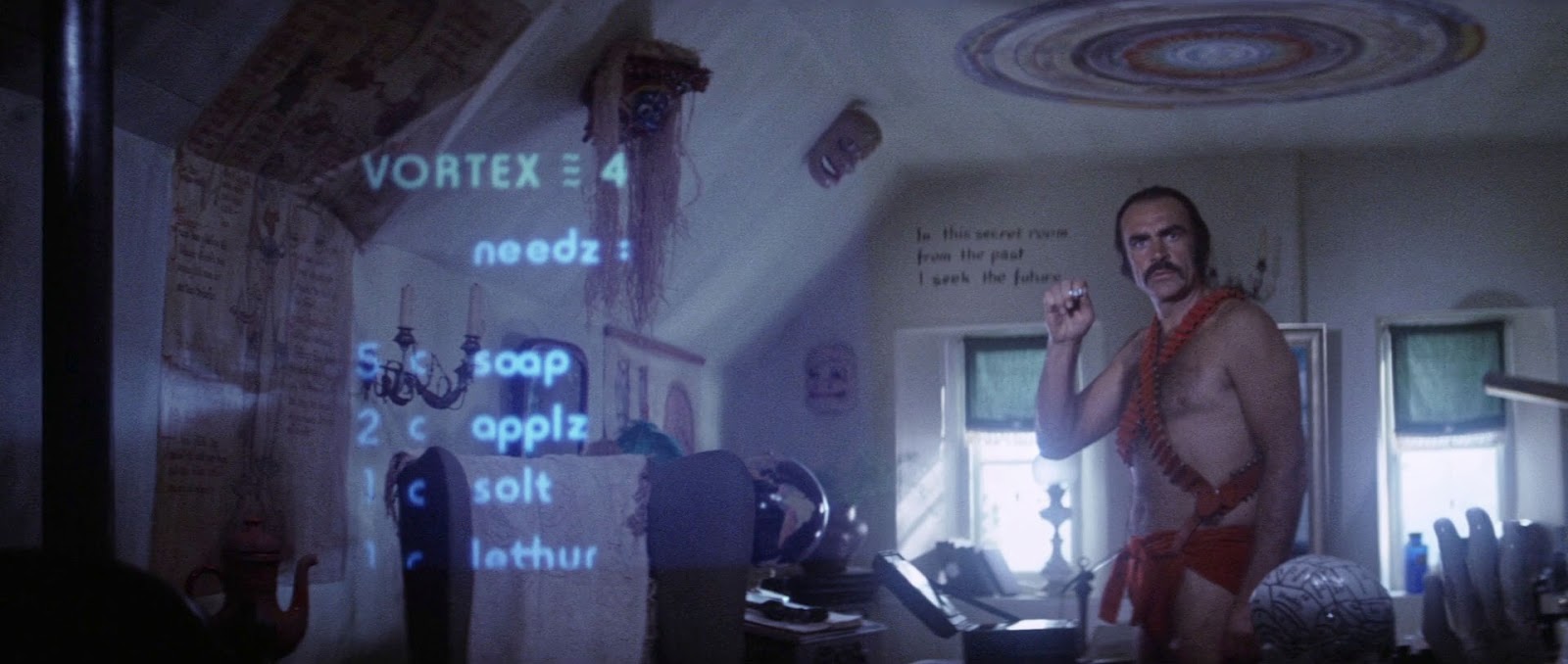
3. The Vortex owes it’s (admittedly doomed) existence to The Tabernacle— an artificial intelligence intimately linked to every Eternal that runs and protects the place. The physical presence of The Tabernacle is revealed in the end of the film as (mild spoiler) a crystal the size of a paperweight. But this is not the part I found intriguing. The interface units the Eternals use to communicate are white metal rings topped with a large square crystal. These rings operate for all intents and purposes like perfected smartphones: They can be used to call people, take notes, scan and diagnose, retrieve and display data, and allow Siri-like verbal communication with Tabernacle.

Consuela (Charlotte Rampling) takes notes.
Damn. The form factor is almost perfect!

Ring displays data. Note that in 2293 the Eternals
have adopted a form of Hip-Hop English.
The long and on-going problem we have with iPhones and Androids in the present day is all in the form factor: to use these devices, you have to walk around with it in your hand and stare at it. Situational awareness suffers for this. Smartphones have managed to make a whole generation of people look detached and unsociable. Even a wearable in the form of a watch is an imperfect solution. Humans were simply not designed to be constantly interacting with a lump of plastic in our hands.

May (Sarah Kestelman) performs a retinal scan with her ring.
A RING, however: stroke of genius! you can talk to it and it answers. it can take pictures and interact with the environment. It can project data and displays. and best of all, you can do all these things without being physically impeded by the device. If we all had tidy little rings rather than clunky phones we’d certainly be in a much better place. Our hands would be free! No more distracted walking or driving-- and we’d see the return of quaint notions such as conversational eye contact. I’m sure a ring that was a portable computer looked like speculative science fiction in 1973, but in 2015 they look like they’re about 5 years away from market reality.

Well-written speculative science fiction is a tricky thing: it does not always reveal itself when first presented, but after a measure of time the world catches up with the creator’s vision.

Thursday, May 7, 2015

Age of Ultron and a Genre That's Far From Done

The Avengers (including a few new recruits on the left), against a background
of the hundreds of robots they're about to shred.
Look: if a movie makes nearly $200 million domestic on opening weekend and nearly $400 million worldwide, you kinda have to see what the fuss is about.

Right off the bat, I can tell you that Avengers: Age of Ultron is a worthy and entertaining addition to the Marvel Cinematic Universe. Having absorbed (mostly via osmosis and basic cable) all TEN previous movies in this continuity, I can tell it's a neat new adventure. In terms of sheer spectacle it's worth the cost of a ticket (though I did not pop for 3D glasses: I'm here for the story, baby). The effects are seamless and perfectly designed and so well-integrated that about halfway in I stopped thinking about the sheer hours of VFX design and rendering that went into every damn frame and just let it wash over me.

HAL 9000. Often imitated,
never surpassed, he still has
much to teach us.
The plot: The Avengers, fresh from saving the world from Loki in the last movie, need to locate and dispose of Loki's scepter, a source of mystical power and all other sorts of mayhem. But Tony Stark (Robert Downey Jr.) wants to use it one last time to get his pet project working: a cybernetic creation that will protect all of Earth. But, as the film 2001: a Space Odyssey taught us, it is very difficult to explain the concept of security to a computer without them misconstruing the intent and trying to kill all of us. Which is what the newly animated Ultron (voiced with Tony Stark insouciance by fellow former Brat Pack member James Spader) immediately tries to do. So the threat this time was internally created-- and it's going to take the entire Avengers team to fix it and save the whole planet. Again.

Joss Whedon's style and humor is far more muted here than in his last Avengers movie, but his sense of cinematic action is still there and even improved a bit over his last outing. the opening battle is one long Alejandro González Iñárritu-style tracking shot. In several parts he slows the action down, which allowed some moments of quiet awe. He also gives some great acting turns for the more human members of the Avengers gang. Hawkeye (Modesto's own Jeremy Renner) has some moments of quiet vulnerability. Black Widow (Scarlett Johansson) also gets some nice little moments. A few notes:

• The widespread criticism about Black Widow's character is absolutely true, unfortunately. I feel the giant three-fingered gloved hand of Disney here, holding back Whedon's organic feminism. Natasha is turned from a complex character with a morally questionable past to a sort of kick-ass den mother with a love story (you know, for the chicks). The chilling "red on my ledger" backstory between her and Loki from the last movie is completely absent. Disappointing.

Paul Rudd IS Ant-Man! As far as I could tell from the
trailers this isn't going to be a Romantic Comedy and
Judd Apatow is nowhere to be seen.
• Contrary to some social observers and film critics we have not reached "Peak Comic Book Movie." Not even close. There is a huge stack of Superhero movies waiting in the wings from Marvel and DC: Ant-Man and the Superman-Batman deal and Wonder Woman (I think) and the Fantastic 4 reboot (huh?) and the Guardians of the Galaxy sequel and many, many more. So far these movies still manage to be inventive and fresh, and the dead hand of Mannerism has yet to appear in the genre. Still…

• ...Though Avengers: Age of Ultron is a fun watch and a neat action story, you can see in it how this genre is going to play out: Death by Character Shield. "Character Shield" is one of the screenwriting phrases which explains why lead characters in series and franchise entertainment tend to survive anything you can throw at them: they HAVE to. The appeal of the leads is what makes a series or franchise work, so whatever hairy death-defying situations the writers put them through they HAVE to make it out the other side. They can be emotionally changed, evolve or what have you, but you can't kill 'em.

Superheroes were tailor-made for action franchises: They're tough, very strong, often superhuman beings who can participate in huge violent battles and generally come out with naught but cosmetic scratches. Which is great, because there are usually a string of movies yet to be made featuring them stretching on into the distant future. Furthermore, these superheroes are generally assigned to quests that invariably have them saving the entire world (the Avengers have done this twice now), which is great because it increases your audience base.  But-- quoting another writer on this subject-- if everything is at stake, then nothing is at stake. They're always going to save the world and they're always going to survive. The character shield now encompasses the whole world and everything in it, and the only things you can battle are aliens (the last Avengers) or robots (this one). There is hope for complexity and consequences in the lesser Marvel movies (Captain America: The Winter Solder was a surprisingly complex political thriller) but the forces of monolithic Narrative Stasis are starting to show. With Stasis comes Mannerism, and then audience boredom, and then we move on to the next thing.

The super-secret hangar under Washington where SHIELD has
created a fleet of equally super-secret helicarriers. (scene from
Captain America: The Winter Soldier.) Your unaccounted
off-budget tax dollars at work!
• The product placement for Audi has evolved from ubiquitous to absurd.  Fine new Audis show up everywhere-- in frenetic chase scenes in Seoul, English universities, sitting out in the open in dirt-poor Eastern European countries with the keys in the ignition. At one point in the film Tony Stark activates an offscreen car with a remote. Guess what make of car, driverless, rolls into frame?

• Considering the large number of people in the United States who identify with right-wing causes, I am always surprised how a movie like this is widely liked and accepted despite the blatant presence in it of World Government-- and by that I mean exactly what Tea Party crazies are talking about: shadowy militarized organizations operating internationally with absolute impunity and with overwhelming destructive power. In Age of Ultron The SHIELD agency has collapsed (due to events in The Winter Soldier) but Nick Fury's organization fits the description perfectly: a UN-level secret military that operates stealthily everywhere in the world, has awe-inspiring weapons of mass destruction and respects no borders. The Avengers themselves have the same basic mission as SHIELD-- but as they are just a handful of superheroes they don't seem quite as-- well, quite as obvious-- as a fleet of flying aircraft carriers. Perhaps those of the Fox News persuasion identify more with the direct, um, "problem solving" methods of the Avengers and SHIELD (i.e. awe-inspiring carnage) than ever consider that they are basically seeing UN Black Helicopters: The Movie.

Tuesday, January 13, 2015

Inherent Vice: Pynchon 101

This poster, aside from tweaking Leonardo DaVinci, gives an idea
of the many wonderful cameos in Inherent Vice. Martin Short
(far right) is particularly funny and strange.
After dinner last Friday, the wife and I stopped by the Redwood City 20 to see what was playing. We spontaneously decided to see Inherent Vice. I love that sort of thing-- we went in unprepared for Paul Thomas Anderson's newest film-- and it ended up being a total delight.

It's the story of "Doc" Sportello (Joaquin Phoenix) a hippie P.I. who is hired to find a missing girl who also happens to be his ex. thus begins Doc's strange journey through 1970 Los Angeles-- both helped and hindered by Detective "Bigfoot" Bjornsen (Josh Brolin), a flat-topped, hippie-hating, brutal/delusional LA cop who also carries a SAG card (we see him as an extra in "Adam-12," in fact). On the long, winding path of investigation Doc encounters all sorts of odd and historically appropriate types: Nazi bikers, cultists, a Laurel Canyon mansion full of hippies, a hidden cabal of dentists and drugs. Lots and lots and lots of drugs. River Phoenix does an amazing job, in fact, of conveying an amazing range of stoned: mellow high, totally baked, buzzed, flying' and everything in-between.

"Doc" Sportello (River Phoenix), doing what he does
dozens of times in the film.
Compared to any other sort of film, I'd say it was not unlike The Big Lebowski- but it's a LOT more like Kiss Me Deadly, a film noir saturated in the light of Los Angeles and the darkness cast by the greedy and evil.

This is the first Thomas Pynchon book ever committed to film, and the script was apparently personally approved by Pynchon as well. Thomas Pynchon and Paul Thomas Anderson were made for each other-- their mutual approach to storytelling is spacey and convoluted yet brimming with insight. Inherent Vice perfectly embodies a lot of Pynchon's favorite motifs: Los Angeles, complex whodunits, subtle mysticism and conspiracies by shadowy, powerful organizations. The 2009 book was considered considered "Pynchon Lite," one of his most accessible novels. If this is so, than the movie version is an even better introduction to his distinctive literary style. Pynchon 101.

Thomas Pynchon, as seen on "The Simpsons." According
to Josh Brolin, the reclusive author has a cameo in
Inherent Vice. Forget it: we'll never figure it out.
Paul Thomas Anderson has developed an elliptical and indirect narrative style, especially in his later films: Inherent Vice could be described as being comprised of a series of close-ups and medium shots of Joaquin Phoenix interacting and reacting. He is an example of a filmmaker whose core relationship with cinematic storytelling has clearly evolved: his beginnings as a teller of Tarantino-like multiple-storyline widescreen films like Boogie Nights and Magnolia to a focus on nuance and dialog, as in The Master and Inherent Vice. This refocusing gives these later films a rambling feel as the plot slowly snakes from one scene to another. It take a little getting used to, but when it all clicks together it's exhilarating.

Inherent Vice is also very funny-- which is sort of unusual. P.T. Anderson doesn't really do funny: There was some situational comedy in Boogie Nights, and Punch Drunk Love was supposed to be funny (it wasn't), but this is the first time he stretches out for some Coen Brothers-style sardonic humor.

Check it out, you'll enjoy it. See it high, and you might enjoy it even more.